
Quantum Information Science with Superconductor-Semiconductor Epitaxy: Case of Hyperdoped Germanium
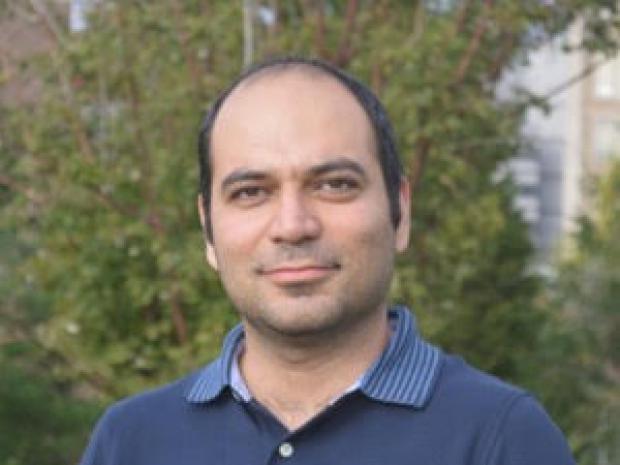
Speaker
Javad Shabani
Professor of Physics, Director of the Center of Quantum Information Physics, Director of NYU Quantum Institute
Title
"Quantum Information Science with Superconductor-Semiconductor Epitaxy: Case of Hyperdoped Germanium "
Abstract
The field of quantum information science is rapidly advancing from few to 1000s of qubits over last decade. There are several promising solid state qubit platforms who would address scalability, easy fabrication and high coherence. In this talk I will focus on introducing superconductivity into group IV elements by doping, as pathway to introduce quantum functionalities into well-established semiconductor technologies.
The non-equilibrium hyperdoping of group III atoms into Si or Ge has successfully shown superconductivity can be achieved, however, the origin of superconductivity has been obscured by structural disorder and dopant clustering. Here, we report the epitaxial growth of hyperdoped Ga:Ge films by molecular beam epitaxy with extreme hole concentrations 10^21cm^-3, that yield superconductivity with a critical temperature of Tc = 3.5K.
Our findings, corroborated by first-principles calculations, suggest that the structural order of Ga dopants creates a narrow band for the emergence of superconductivity in Ge, establishing hyperdoped Ga:Ge as a low-disorder, epitaxial superconductor-semiconductor platform. This platform opens up a new path for integration of millions of qubits for quantum sensing and computing.
About Speaker
Prof. Shabani received his PhD from Princeton University in 2011. After two years of research on semiconductor-based qubits at Harvard University, he joined UC Santa Barbara. There, he worked closely with Microsoft research on hybrid semiconductors/superconductors heterostructures to study topological superconductivity. He is an expert in quantum materials and devices for computation technologies.
He is currently a professor of Physics at New York University. His current research interests are :
1) Novel states of matter at interfaces with focus on hybrid superconductor-semiconductor systems
2) Mesoscopic and nanoscale physics with emphasis on low dimensional semiconductors with focus on new materials/device development for quantum information
3) Physics of integer and fractional quantum Hall effect and
4) Epitaxial growth of compound superconducting metals-semiconductor, including high mobility two-dimensional electron systems and nano-plates using molecular beam epitaxy.
Awards : US Air Force Young Investigator award, 2016
US Army Young Investigator award, 2016