
Neuroengineering Organoids for the Study of Neurological Disorders
Speaker:
Annie Kathuria, Ph.D.
Assistant Professor, Department of Biomedical Engineering
Kavli Neuroscience Discovery Institute, Johns Hopkins University
Abstract:
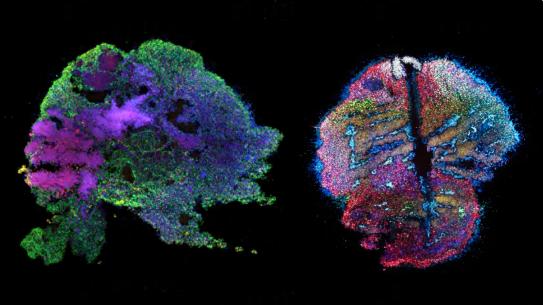
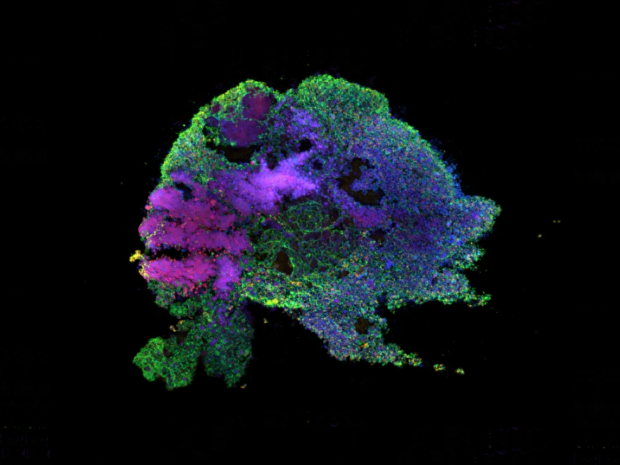
Understanding and treating complex neurological disorders such as schizophrenia, bipolar disorder, autism spectrum disorders, Alzheimer’s disease, and ALS remains one of the most pressing challenges in medicine. Despite decades of progress in neuroscience and pharmacology, clinical decision-making still relies heavily on trial-and-error approaches, in part because traditional animal models fail to capture the cellular complexity and functional diversity of the human brain. In this talk, Dr. Kathuria will present her work on engineering human organoids as advanced 3D models for the study of neurological disease. By leveraging the regenerative capacity of pluripotent stem cells, her group builds highly structured brain and multi-organ organoids that recapitulate key aspects of human tissue micro-architecture and enable investigation of disease mechanisms at cellular and network levels inaccessible in animal models. The presentation will highlight how these organoid platforms are integrated with multi-electrode arrays and high-throughput imaging to enable functional readouts of neural activity, connectivity, and drug response. This multimodal approach supports scalable drug discovery, toxicological screening, and studies of how environmental factors, including nutrition, toxins, and nicotine, influence human neural systems. Together, these efforts point toward a future in which human-relevant organoid models enable more precise, mechanism-driven therapies for neurological disorders and accelerate the path toward personalized medicine.
Dr. Kathuria earned her PhD in 2016 in Cellular and Molecular Neuroscience from King’s College London, following an MSc in Clinical Neuroscience, and completed dual BS degrees in Neuroscience and in Genetics, Cell Biology, and Development at the University of Minnesota. Prior to joining Johns Hopkins, she completed advanced research training at Harvard Medical School and served as a Research Scientist and Associate Member at the Broad Institute of MIT and Harvard, as well as Affiliate Faculty at the Harvard Stem Cell Institute. Dr. Kathuria is recognized as one of the early pioneers in applying cerebral organoids to schizophrenia and bipolar disorder research, and her work has been recognized with multiple early-career honors, including the Anne Klibanski Visiting Scholar Award and the Samuel Gershon Junior Investigator Award. She has also secured competitive research funding to support disease-focused organoid studies that integrate multi-electrode arrays, high-throughput imaging, and multi-omics profiling.