
Combining Experiments with Computational Models to Engineer the Smallest Blood Vessels
Speaker:
Shayn Peirce-Cottler, Ph.D.
Professor and Chair of Biomedical Engineering
Harrison Distinguished Teaching Professor
University of Virginia
Abstract:
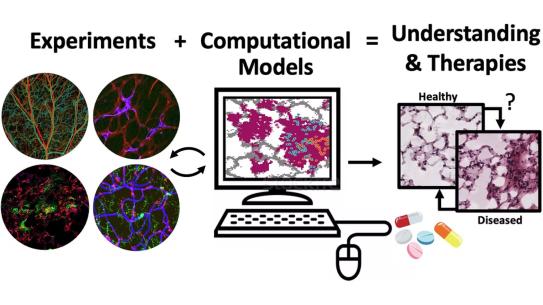
Microvessels, including capillaries, small arterioles, and venules, are essential for delivering oxygen and nutrients to tissues and play a central role in tissue repair, regeneration, and disease progression. Despite their importance, reliably controlling how these tiny blood vessels grow and remodel remains a major challenge in tissue engineering and regenerative medicine. In this talk, Shayn Peirce-Cottler will describe how combining wet-lab experiments with multiscale computational models and machine-learning tools can reveal the biological rules that govern microvascular adaptation. By integrating quantitative imaging with cell and molecular biology and predictive modeling, her work connects molecular signals and cellular behaviors to the structure and function of vascular networks that emerge over time. These approaches allow not only the interpretation of experimentally observed vascular remodeling, but also the prediction of how microvessels are likely to change under different physiological conditions or therapeutic interventions. The lecture will highlight how this integrated strategy can be used to design therapies that promote functional and long-lasting microvascular networks in injured or diseased tissues, while limiting harmful vascular changes associated with diabetes, cardiovascular disease, neurodegeneration, and cancer. More broadly, the talk emphasizes how engineering-inspired modeling frameworks can help translate complex biological data into actionable design principles for regenerative medicine.
Shayn Peirce-Cottler earned dual B.S. degrees in Biomedical Engineering and Engineering Mechanics from Johns Hopkins University in 1997, followed by a Ph.D. in Biomedical Engineering from the University of Virginia in 2002 and postdoctoral training at UVA. In 2004, she joined the University of Virginia faculty as an Assistant Professor and was appointed Chair of the Department of Biomedical Engineering in 2022. She holds secondary appointments in the Departments of Ophthalmology and Plastic Surgery. Professor Peirce-Cottler has authored more than 125 peer-reviewed publications and book chapters and holds multiple U.S. patents. She is a Fellow of the American Institute for Medical and Biological Engineering and the Biomedical Engineering Society, and she has served as Past President of the Microcirculatory Society. This society recognized her contribution with the 2024 Eugene M. Landis Award. A nationally recognized educator and mentor, she teaches courses in computational modeling and cell and molecular physiology and has received multiple awards for excellence in graduate teaching and mentoring. Her research has been continuously supported by the National Institutes of Health, the National Science Foundation, and other federal and foundation sources.