

Stochastic Magnetic Tunnel Junctions for Probabilistic Computing and Solving Combinatorial Optimization Problems
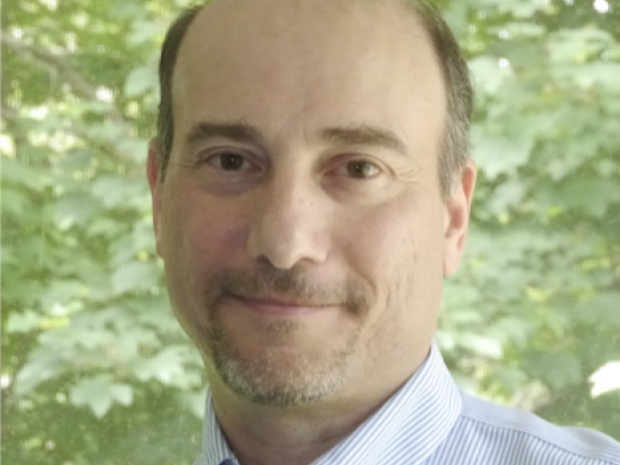
Speaker
Andrew Kent
Professor of Physics and the Founding Director of the Center for Quantum
Phenomena at New York University.
Title
"Stochastic Magnetic Tunnel Junctions for Probabilistic Computing and Solving Combinatorial Optimization Problems "
Abstract
Magnetic tunnel junctions (MTJs) are widely used as nonvolatile memory elements, but they can also serve as controllable, high-rate sources of random bits [1]. When operated in a stochastic regime, MTJs naturally function as probabilistic bits providing a physical hardware substrate for Ising-type optimization and probabilistic computing architectures. In this talk, I will describe experimental studies of perpendicularly magnetized MTJs that are magnetically stable at room temperature [2,3]. Instead of relying on spontaneous thermal magnetization fluctuations (superparamagnetism), stochastic behavior is generated on demand by actuating the device with nanosecond electrical pulses in the ballistic spin-transfer regime. This approach enables precise control of the switching probability.
I will present measurements showing high-rate (up to 100 MHz/MTJ), reproducible generation of random bit streams [4] and random telegraph noise [5]. By interfacing individual pMTJs with custom electronics and a field-programmable gate array (FPGA), we generate truly random numbers that pass the full NIST statistical test suite with no post-processing [6]. Our recent results further show that actuated stochastic MTJs (A-sMTJs) can be electrically connected in simple circuits to produce tunable, circuit-mediated interactions that map directly onto effective Ising couplings. Finally, I will discuss the potential of stochastic MTJs for physics-inspired computing systems, including their use for solving combinatorial optimization problems [7].
About Speaker
Andrew Kent is a Professor of Physics and the Founding Director of the Center for Quantum Phenomena at New York University. He earned his B.Sc. with Distinction in Applied and Engineering Physics from Cornell University and his Ph.D. in Applied Physics from Stanford University. His research focuses on the physics of magnetic nanostructures, nanomagnetic devices, and magnetic information processing. He is a Fellow of the American Physical Society (APS) and the Institute of Electrical and Electronics Engineers (IEEE).
Dr. Kent has received numerous awards and honors, including an Honorary Doctorate from the University of Lorraine, France (2013), the French Jean d'Alembert Research Fellowship (2017), and appointments as Professor at the University of Lorraine in 2018 and 2023.