

Soft and Hard Nanomatter for the Preservation of Cultural Heritage
Soft and hard nanomatter for the preservation of cultural heritage: gels for the preservation of motion picture films and painted surfaces
Nanotechnology involves the manipulation of matter at the near-atomic scale to create new structures with properties that differ significantly from those of their bulk materials. Specifically, it encompasses engineered structures, devices, and systems with dimensions between 1 and 100 nanometers. At this scale, materials exhibit unique physical, chemical, and biological behavior. Over the past two decades, nanotechnology has driven major scientific advances across diverse sectors, including medicine, consumer products, energy, materials science, and environmental remediation.
A particular area where hard and soft nanomaterials are largely used is the Cultural Heritage Conservation. In the center's research, soft nanomaterials, including gels and liquid-dispersed systems such as micellar solutions and oil-in-water microemulsions, have been developed as innovative cleaning systems for painted surfaces of historical and artistic significance. Because cleaning is one of the most delicate and critical phases of conservation practice, nanotechnology-based approaches offer a promising and more controlled alternative to traditional methods that rely heavily on pure organic solvents.
More recently, the Cultural Heritage Conservation's work has been expanded to the preservation of motion picture films produced on cellulose acetate supports. They have synthesized and tested porous, soft nanomaterials as environmentally friendly inhibitors of “vinegar syndrome”—the progressive degradation of cellulose acetate triggered by the hydrolytic cleavage of ester bonds. By capturing the acetic acid released during deacetylation, these materials help slow the autocatalytic reaction and extend the lifespan of these culturally important audiovisual artifacts.
About the Speaker
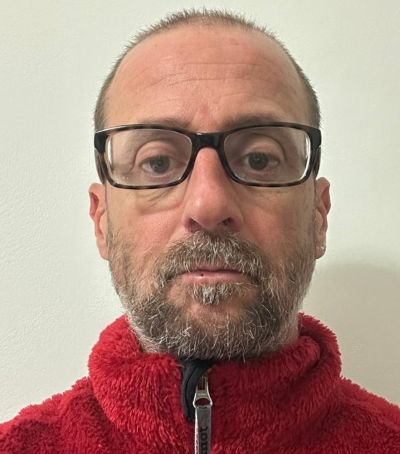 Dr. Emiliano Carretti is an Associate Professor of Analytical Chemistry at the University of Florence, specializing in the application of chemistry to cultural heritage conservation and environmental protection. He holds a degree in Chemistry and a PhD in Cultural Heritage Conservation Science from the University of Florence, and has conducted extensive postdoctoral research within both the Department of Chemistry and the CSGI Consortium, where he has been an active member for many years. His international experience includes a research period at Georgetown University under the supervision of Prof. R.G. Weiss, and he has subsequently been invited as a lecturer at institutions such as Georgetown University, the U.S. National Science Foundation, and Vilnius University.
Dr. Carretti’s scientific work focuses on the chemistry of dispersed systems, interfaces, and nanomaterials, with particular emphasis on nanoscience and nanotechnology as applied to cultural heritage conservation. His research encompasses the synthesis, characterization, and application of nanoparticles, microemulsions, micellar solutions, and gels, contributing significantly to the development of advanced materials and innovative green technologies for the conservation of motion-picture films and historic photographic documents.