
The Versatility of Perovskite Materials for Optoelectronics
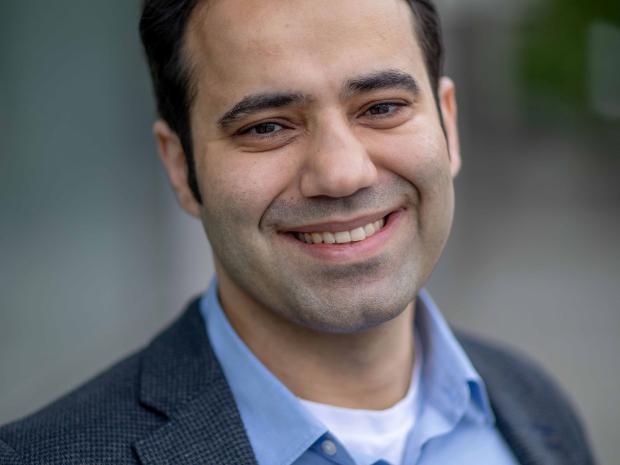
Speaker
Michael Saliba
Institute for Photovoltaics (ipv) University of Stuttgart
Research Center Jüllich, Germany
Abstract
Perovskite solar cells (PSCs) have created much excitement in the past years and attract spotlight attention. This talk will provide an overview of the reasons for this development highlighting the historic development as well as the specific material properties that make perovskites so attractive for the research community.
The current challenges are exemplified using a high-performance, multicomponent system for PSCs (including Rb, Cs, methylammonium (MA), formamidinium (FA) perovskites). The resulting compositions exhibit higher performances, resilience against external stressors and reproducibility. [1-4]
Unfortunately, many of the newly formulated liquid precursors often exhibit complex crystallization behaviour struggling to expel the typically used DMSO solvent. To delay the crystallization time, two strategies are proposed to remove the strongly complexating DMSO molecules through a) modified processing of the liquid thin-film and b) a coordination solvent with a high donicity and a low vapor-pressure leading to a marked improvement in
the overall film quality.[5]
Lastly, interface manipulation, especially on top of the formed perovskite, is becoming a central topic to advance further. Typically, this involves chemical surface treatments with a complex interaction. Here, light annealing is introduced as a universal, non-chemical approach to modify the perovskite surface resulting in a reduced surface recombination.[6]
Bio
Prof. Michael Saliba is a full professor and the director of the Institute for Photovoltaics (ipv) at the University of Stuttgart. He holds a dual appointment at the Helmholtz Research Center Jülich, Germany. His research focuses on a deeper understanding and improvement of
optoelectronic properties of photovoltaic materials with an emphasis on emerging perovskites for a sustainable energy future. One example for his groundbreaking research is the development and pioneering of a general strategy for the combinatorial synthesis and exploration of novel
perovskite compositions. Michael is the Speaker of the Graduate School for “Quantum Engineering”. He was awarded a Starting Grant by the European Research Council. Previously, Michael was an Assistant Professor at TU Darmstadt, a Group Leader at Fribourg University and a Marie Curie Fellow at EPFL with research stays at Cornell and Stanford. He obtained his PhD at Oxford University and MSc degrees in Physics and Mathematics at Stuttgart University together with the Max Planck Institute for Solid State Research. Michael has published 250 works attracting 55’000 citations and filed 5 patents in the fields of plasmonics, lasers, LEDs and perovskite optoelectronics. He was on the Early Career Board of Nano Letters, is on the Editorial Advisory Board of ACS Energy Letters and a Senior Editorial Board Member of Materials Today. Clarivate lists him as Highly Cited Researcher for six times in a row since 2018. He was awarded the Heinz-Maier-Leibnitz prize by the German Research Foundation (DFG), the Early Career Prize in Semiconductors by IUPAP, and named as one of the World’s 35 Innovators Under 35 by the MIT Technology Review; he is also a Fellow of the Internation Science Council. In addition, Michael received the Kavli Foundation Early Career Lectureship in Materials Science from the Materials Research Society, the Curious Minds Award from Merck, the EU-40 Materials Award from the European Materials Research Society, the Wenham Award of IEEE-PVSC and the High Impact Award from the Helmholtz Association.