
Rationally modulating 'undruggable' biomolecular targets using computational tools
Speaker:
Timothy Cardozo, MD, PhD
Associate Professor of Biochemistry and Molecular Pharmacology
NYU Grossman School of Medicine
Abstract:
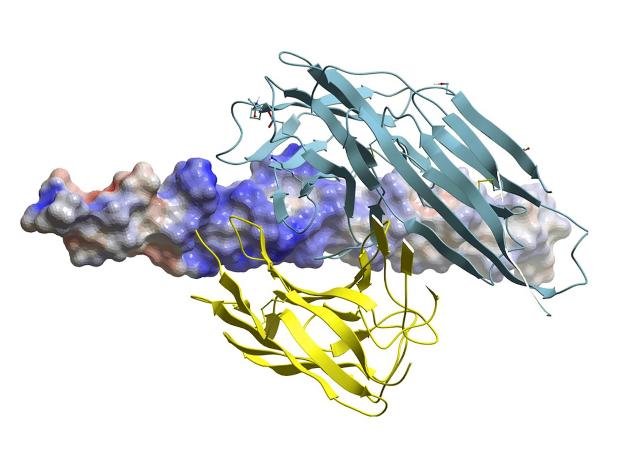
Many of the most important disease-related proteins remain “undruggable,” meaning they lack the well- defined pockets or stable conformations that conventional drug discovery methods rely on. Dr. Cardozo’s laboratory develops and applies computational strategies to rationally modulate such challenging biomolecular targets. By integrating structural biology, protein engineering, bioinformatics, cheminformatics, and artificial intelligence, his team seeks to bridge molecular structure with biological and clinical function. One long- standing focus is on vaccines, where they design immunogens that can direct protective antibody responses against complex viral structures. His group has played a leading role in efforts to engineer HIV vaccines, including strategies to stabilize and present highly dynamic epitopes on the viral spike protein. Dr. Cardozo also extends these methods to small-molecule drug discovery, particularly for ion channels and other membrane proteins central to cancer, autoimmunity, cardiovascular, and neuropsychiatric disease. More recently, his lab has advanced concepts such as autoantibody–autoantigen competitor decoys for autoimmune disorders and contributed to collaborative efforts in lupus therapy development.
The computational tools and design strategies are coupled with experimental work through collaborations across NYU and beyond, allowing us to translate molecular insights into candidate drugs and vaccines. This talk will highlight case studies illustrating how rational computation can render the undruggable tractable. Dr. Cardozo received both his medical and doctoral degrees through the Medical Scientist Training Program at NYU School of Medicine. He then completed his residency in Dermatology at NYU Medical Center and pursued postdoctoral research in the laboratory of Michele Pagano at NYU School of Medicine. He joined the NYU faculty in 2005. There, he directs a research program that integrates computational chemistry, structural biology, protein engineering, and artificial intelligence to guide the rational design of drugs and vaccines. His laboratory has made contributions to HIV vaccine development, innovative therapeutic strategies for autoimmune disease, and collaborative translational efforts in lupus therapy. His research accomplishments have been recognized with several major NIH awards, including a New Innovator Award, the NIDA Avant-Garde Award for HIV/AIDS Research, and other high-profile innovation grants
