
Leveraging functional Genomics to Identify Parkinson’s Disease Risk Genes
Speaker:
Nathaniel Safren, PhD
Assistant Professor of Neurology
Northwestern University Feinberg School of Medicine
Abstract:
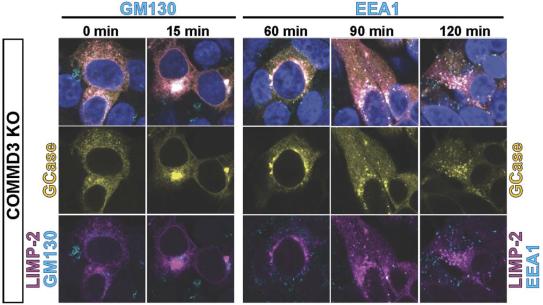
Parkinson’s disease (PD) is the second most common neurodegenerative disorder, yet the genetic and molecular mechanisms underlying its onset remain incompletely understood. While pathogenic variants in the lysosomal enzyme gene GBA1 are a well-established risk factor, only a fraction of carriers ultimately develop PD, suggesting the presence of additional genetic modifiers. To address this challenge, Dr. Safren’s team employed a genome-wide CRISPR interference screen to systematically silence every human protein-coding gene and identify regulators of lysosomal glucocerebrosidase (GCase) activity. This unbiased approach revealed a previously unrecognized role for the Commander complex, a group of 16 proteins including COMMD family members, in maintaining lysosomal homeostasis. Loss of Commander components impaired trafficking of lysosomal proteins, diverted them into extracellular vesicles, and disrupted lysosomal recycling capacity. Importantly, genetic analyses in two large cohorts (UK Biobank & AMP-PD) demonstrated that rare loss-of-function variants in Commander genes are significantly enriched among individuals with PD. These findings establish Commander dysfunction as a new genetic risk factor for PD and highlight lysosomal dysregulation as a converging pathway in neurodegeneration. Beyond their implications for PD, these results broaden our understanding of how lysosomal pathways intersect with disease mechanisms in related disorders such as dementia with Lewy bodies. Therapeutically, the work points to the potential of targeting Commander components and combining such strategies with approaches that enhance GCase activity, offering a rational framework for future combinatorial treatments. Together, this research illustrates how functional genomics can uncover hidden disease mechanisms and accelerate the development of precision therapies for PD and related conditions.
Dr. Safren earned his BS in Psychobiology from SUNY Binghamton in 2008 and his PhD in Neuroscience from the University of Maryland School of Medicine in 2015. His doctoral work focused on the role of proteostasis factors in Huntington’s disease. He then pursued postdoctoral training in Dr. Sami Barmada’s laboratory at the University of Michigan, where he developed innovative live-cell imaging assays to monitor neuronal autophagy and identified novel drug candidates that modulate this process. In 2020 he joined Northwestern, where he has investigated the genetic and cellular mechanisms underlying neurodegenerative disorders. His research has resulted in more than 18 scientific publications. Beyond his academic contributions, he has established industry collaborations and developed high-content imaging pipelines that have advanced the study of neuronal survival and protein aggregation.