
Monitoring and Assessment of Vascular Diseases with Dynamic Optical Spectroscopy and Imaging
Speaker:
Nisha Maheshwari, PhD Candidate
Department of Biomedical
New York University Tandon School of Engineering
Abstract:
Peripheral arterial disease (PAD) and ischemic stroke are two of the most widespread and burdensome vascular conditions globally. PAD affects over 200 million individuals—a staggering 72% increase over the last three decades—while recent projections from the World Stroke Organization indicate that one in four people will suffer a stroke in their lifetime. Both conditions significantly contribute to cardiovascular morbidity and mortality, yet they are frequently underdiagnosed in their early stages. Existing diagnostic tools—such as the ankle-brachial index, computed tomographic angiography, and ultrasound—are limited by issues of sensitivity, accessibility, or applicability in real-time, leaving critical gaps in early detection and longitudinal monitoring. In this context, optical imaging modalities like near-infrared spectroscopy (NIRS) and diffuse optical tomography (DOT) offer promising, non-invasive alternatives. By leveraging the well-characterized propagation of near-infrared light (650–2500 nm) through biological tissue, NIRS and DOT enable the quantification of hemodynamic parameters, including oxy- and deoxyhemoglobin concentrations, as well as tissue oxygen saturation (StO₂), providing valuable insights into vascular function.
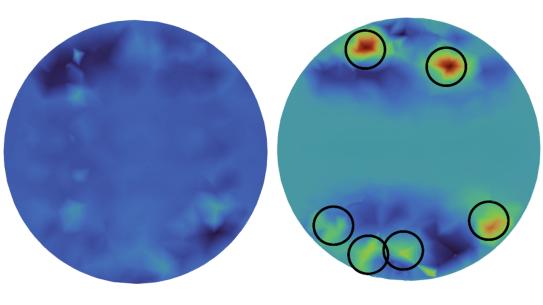
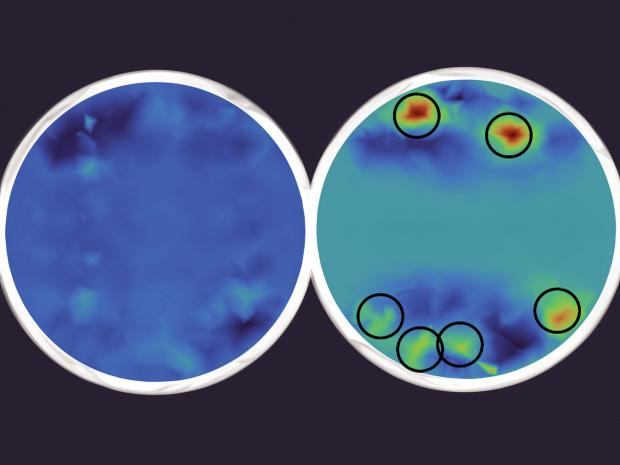
This presentation will detail a multi-stage research effort to validate and advance the use of NIRS and DOT for PAD and ischemic stroke monitoring. A 95-patient observational PAD study using a custom NIRS system demonstrated strong correlations between optically derived biomarkers and disease severity, including intraoperative monitoring. This led to the development of a handheld, pressure-sensitive NIRS probe to assess surgical outcomes. Extensions of the system for carotid artery monitoring and 3D DOT-based imaging further highlight its potential for stroke risk evaluation and plaque characterization.
Nisha Maheshwari received their B.S. in Engineering from Harvey Mudd College in 2019 and their M.S. in Biomedical Engineering from Columbia University in 2020. Subsequently, they worked as a Research Assistant in Dr. Hielscher’s Clinical Biophotonics Lab at NYU. In January 2021, they became the first student to enter NYU’s new BME PhD program. Nisha passed the qualifying exam and became a PhD candidate in May 2022. In August of 2023, their project on carotid artery monitoring was awarded the Technology Acceleration & Commercialization grant from the NYU Offices of the Provost.