
Towards Generalizable Safety for Robot Autonomy: Integrating Model-Based Analysis with Data-Driven Approaches
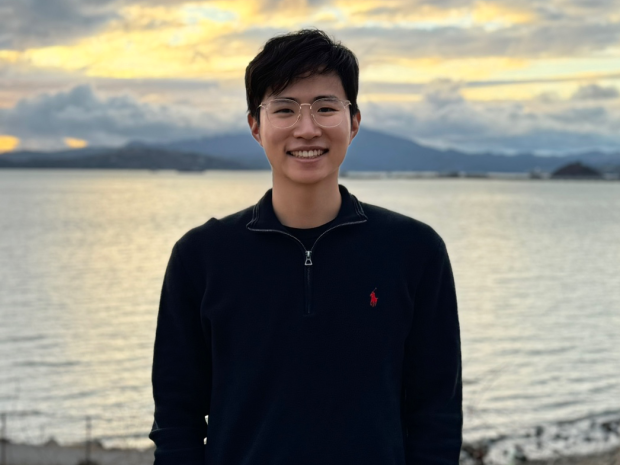
Speaker
Jason Jangho Choi
Ph.D. candidate, Mechanical Engineering, University of California, Berkeley
Title
"Towards Generalizable Safety for Robot Autonomy: Integrating Model-Based Analysis with Data-Driven Approaches"
Abstract
Ensuring safety is a fundamental prerequisite for deploying robots in real-world environments, from self-driving cars to autonomous air taxis. Achieving autonomy at a societal scale requires a foundation built on rigorous safety guarantees. However, existing safety frameworks often struggle in complex, unforeseen scenarios due to their reliance on human expertise and trial-and-error methods. My research aims to develop generalizable safety frameworks with principled design methodologies and assurance mechanisms that reduce the need for extensive engineering effort.
In this talk, I will introduce data-driven safety frameworks for robot autonomy, emphasizing their control-theoretic foundations and extensions to data-driven and learning-enabled methods. First, I will demonstrate how two key safety concepts in control theory—control barrier functions (CBFs) and Hamilton-Jacobi reachability—can be unified into a single framework via the control barrier-value function (CBVF) and discuss its implications for learning-enabled methods. Next, I will show its application to achieving safe decentralized autonomy in advanced air mobility (AAM) operations, integrating CBVF-based safety filters with multi-agent reinforcement learning (MARL). Finally, I will introduce a novel data-driven Hamiltonian approach, enabling the direct construction of certifiable safe sets from system trajectory data. A key application of this framework is in automating flight test procedures for air taxi vehicles with complex nonlinear aerodynamics, providing a guaranteed approach to conducting experiments safely while expanding the verified safe operating region.
About Speaker
Jason Jangho Choi is a Ph.D. candidate in Mechanical Engineering at the University of California, Berkeley, expected to graduate in May 2025. He received his B.Sc. in Mechanical Engineering from Seoul National University in 2019. His research focuses on safety assurance for learning-enabled decision-making in dynamical systems, with broader interests at the intersection of learning and control, including nonlinear systems, optimal control theory, and reinforcement learning. He applies safety frameworks to robotics and aviation autonomy, aiming to enhance reliability in real-world autonomous systems. He was recognized as a Robotics: Science and Systems (RSS) Pioneer 2024 for his contributions to safe autonomy.