

Human Brain Interferometers for Better Blood Flow Monitoring after Traumatic Brain Injuries (TBI)
Speaker:
Vivek J. Srinivasan, PhD
Depts. of Ophthalmology and Radiology
NYU Grossman School of Medicine
Abstract:
A major goal in the management of traumatic brain injury (TBI) is to optimize cerebral blood flow (CBF) over the days to weeks following injury. Yet, there is currently no well-established, non-invasive method to continuously monitor CBF in adults. Though diffuse optical flowmetry (DOF) methods for monitoring CBF based on dynamic scattering of near-infrared (NIR) light are used in research, these methods suffer from fundamental limitations. First, they require costly photon counting, which strictly constrains achievable speed, brain specificity, and brain coverage. Second, they lack depth discrimination, leading to contamination from blood flow in superficial tissues. Third, they require assumptions about optical properties, which can vary between individuals or across brain regions. Fourth, they are sensitive to noise from ambient light. To address these limitations, Dr. Srinivasan’s team has introduced interferometry to human diffuse optics, creating a new class of NIR light-based monitoring tools, called interferometric Diffuse Optical Spectroscopy (iDOS). In this talk Dr. Srinivasan will show that with interferometry, a CMOS sensor can replace photon counting and parallelize measurements of weak diffuse light fluctuations that reveal CBF. In this way, more measurements can be taken, which improves brain coverage. In addition, it is demonstrated that time-of-flight (TOF) resolution can be achieved, which leads to more accurate quantification of CBF. Finally, it is discussed how these technical improvements lead to better follow-up care in the days after brain injury.
Dr. Srinivasan earned his Ph.D. in Electrical Engineering and Computer Science from MIT in 2008. Subsequently he became a Research Fellow and Instructor in Radiology at the Harvard Medical School and Massachusetts General Hospital. In 2012, he joined the Dept. of Biomedical at the University of California – Davis as Assistant Professor and was promoted to Associate Professor in 2016. In 2020, Departments of Radiology and Ophthalmology recruited him Dr. Srinivasan earned his Ph.D. in Electrical Engineering and Computer Science from MIT in 2008. Subsequently he became a Research Fellow and Instructor in Radiology at the Harvard Medical School and Massachusetts General Hospital. In 2012, he joined the Dept. of Biomedical at the University of California – Davis as Assistant Professor and was promoted to Associate Professor in 2016. In 2020, Departments of Radiology and Ophthalmology recruited him successfully to the NYU Grossman School of Medicine.
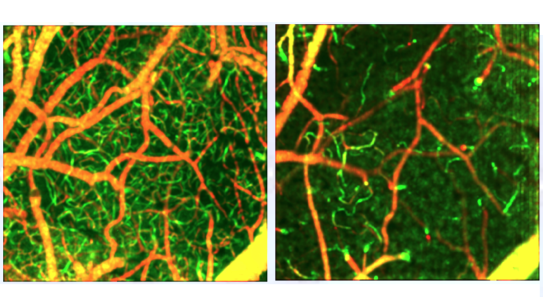
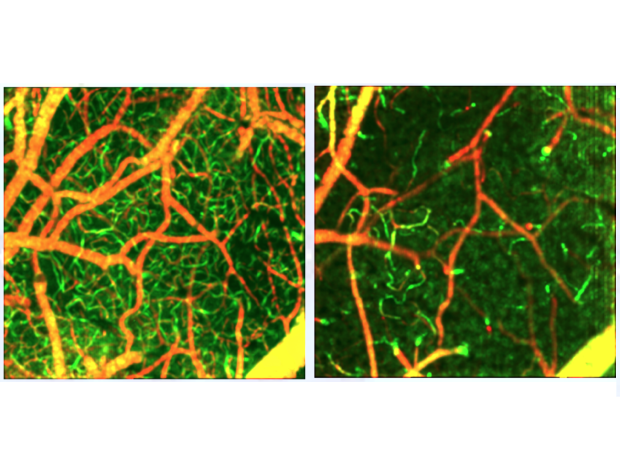
before and after filament middle cerebral artery occlusion (fMCAO),
which is a small animal model of a stroke and TBI.