

Nabiha Siddique
UN Sustainability Goals
- Quality Education
Areas of Excellence
- Emerging Media
Global Challenge: Emerging Media
Abstract:
Educational inequity remains a pressing global challenge. Millions of underserved children worldwide lack access to quality education due to factors such as poverty, geographic isolation, and limited resources. This disparity hinders academic achievement, perpetuates cycles of poverty, and limits future socioeconomic opportunities. Aligned with the United Nations Sustainable Development Goal 4 (Quality Education), this paper explores the potential of leveraging Virtual Reality (VR) technology to bridge educational gaps and promote equity in learning environments.
This paper highlights the importance of integrating engineering innovation with social impact by reflecting on my experiences with interdisciplinary collaboration through Vertically Integrated Projects (VIP) teams and study abroad programs. It reviews current literature to assess VR's potential as an emerging media tool in education, particularly its ability to create immersive, engaging, and scalable learning opportunities. The paper analyzes case studies of VR applications in education, focusing on their successes, limitations, and adaptability to low-resource settings.
This paper focuses on identifying practical strategies for implementing VR in underserved communities. Key areas of emphasis include addressing challenges such as cost, infrastructure limitations, and accessibility while exploring partnerships with stakeholders such as NGOs, private tech companies, and local governments. Additionally, this paper evaluates the broader societal and economic implications of reducing educational inequity through innovative technologies.
Ultimately, this study proposes actionable solutions for deploying VR to provide quality education for underserved children. These solutions emphasize the importance of interdisciplinary collaboration, resource optimization, and culturally relevant content development. By aligning VR implementation strategies with SDG 4 objectives, this paper advocates for a transformative approach to education that ensures no child is left behind, regardless of their geographic or socioeconomic circumstances.
Bio:
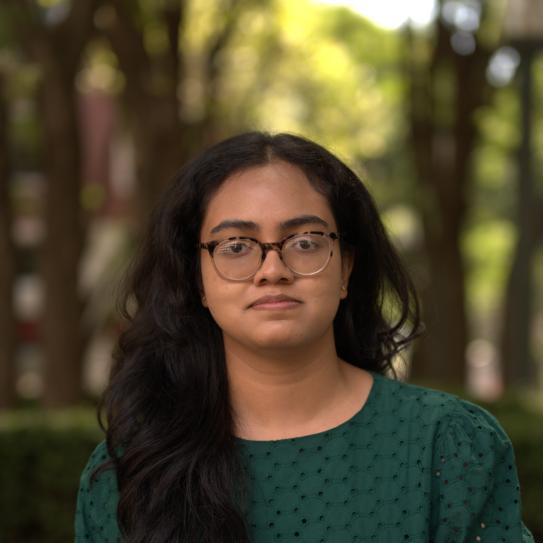
Nabiha Siddique was born in Dhaka, Bangladesh, and spent most of her life in New York City. Her interests span traveling, volleyball, badminton, kayaking, hiking, and architecture.
Currently, she is pursuing a major in computer science with a minor in business management at NYU Tandon School of Engineering. At Tandon, Nabiha is actively involved in the Metaverse for Education team, the General Engineering department, the Society of Asian Engineers and Scientists (SASE), and the Global Leaders and Scholars in STEM (GLASS) honors program.
As a dedicated member of GLASS, she focuses on applying her engineering education within a global context. Her upbringing in New York City, coupled with her passion for traveling, has provided her with exposure to diverse cultures and underscored the importance of inclusivity in technology.
Professionally, Nabiha is interested in sustainable engineering design for the built environment. Following graduation, she will join Arup's telecommunications team, where she looks forward to honing her skills and leveraging the company's international network.