

Third Spaces as a First Space: Analyzing Places Where New Yorkers Convene
Ketan Sinha, Office of the New York City Public Advocate
Authors
Jiangnan Li, Krystal Wang, Wenjie Yang
Research Question
What counts as a "third space" for New Yorkers, and how accessible and available are these spaces across the city? The project qualitatively and spatially defines third spaces, social spaces separate from home and work or school, based on how children and seniors understand them.
Background
Third spaces are where community is built, free from the responsibilities and pressures of home and work. They foster connection and, especially for younger people, build social skills and collective responsibility. As physical and free or low-cost third spaces disappear, and as younger people's social lives increasingly move online, it is more important than ever to identify a new paradigm for third spaces centered on community needs.
Methodology
The project involves:
- Conducting recorded and transcribed interviews with children and seniors about their understanding of a third space.
- Grouping responses into definitions and spatial themes
- Creating a third space map contextualized to current engagement and future aspirations.
- Comparing NYC-specific spatial definitions with other domestic and international cities.
Deliverables
- Data visualizations
- GitHub repository with documentation
- Interactive data dashboard
- Policy recommendations
Data Sources
- Recorded and transcribed interviews with children and seniors
- Additional data sources to be confirmed
Fall 2026 Urban Science Intensive I Instructor
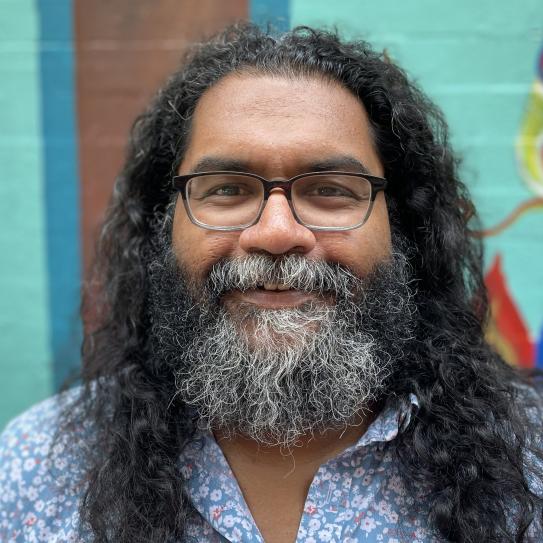
Manny Patole
Spring 2027 Urban Science Intensive II Instructor

Hanxue Wei
Fall 2026 Urban Science Intensive I Instructor
Manny Patole
Spring 2027 Urban Science Intensive II Instructor