

Pathways to Urban Nature: Mapping Spatiotemporal Networks of Park Visitation Beyond the 10-Minute Walkshed
Xiyuan (Ryan) Ren, Postdoctoral Associate, C2SMART Center
MENTOR:
Yichun Zhou, Postdoctoral Fellow, NYU Shanghai
Authors
Yukun Zhu, Hao Wang, Zongting Wu
Research Question
How do people actually access and value urban parks, beyond what a fixed walking-distance buffer can capture? The project combines econometric and AI approaches to build a choice-based spatiotemporal network model of park visitation in New York City and Shanghai, grounded in observed visitation and mobility data.
Background
Cities increasingly measure park access with a single yardstick: the X-minute walk. That static buffer assumes everyone walks, goes to the nearest park and visits at the same time. Real behavior breaks all three assumptions: people travel farther for the right park, choose across a set of parks that differ in size, function and quality, and visit in rhythms that shift by hour, season and weather.
Replacing that assumption with evidence reveals which parks people actually value, when and how they get there, recovering willingness-to-visit and consumer surplus rather than presuming proximity equals use. This helps planners target investment where behavior, not just geography, shows unmet demand, advancing equity in green-space access.
Methodology
The project involves:
- Integrating mobility and park visitation data for New York City and Shanghai.
- Building hybrid econometric and machine learning models, pairing an interpretable discrete choice model with a graph neural network to balance explanation and prediction.
- Using graph-based network analysis to construct a choice-based spatiotemporal network of park visitation.
- Tracing how park networks shift across neighborhoods, seasons and weather conditions.
Deliverables
- Spatiotemporal Network Model: A behavior-centered model of park visitation for NYC and Shanghai.
- Planning Insights: Two planning levers, extending access beyond walking through multimodal mobility, and treating parks as a time-differentiated system to find service cold spots and functional complementarities.
- Transferable Framework: A rigorous alternative to catchment metrics that other metropolitan park systems can adopt.
Data Sources
- Mobility data
- Park visitation data for New York City and Shanghai
- Weather and seasonal data
Fall 2026 Urban Science Intensive I Instructor
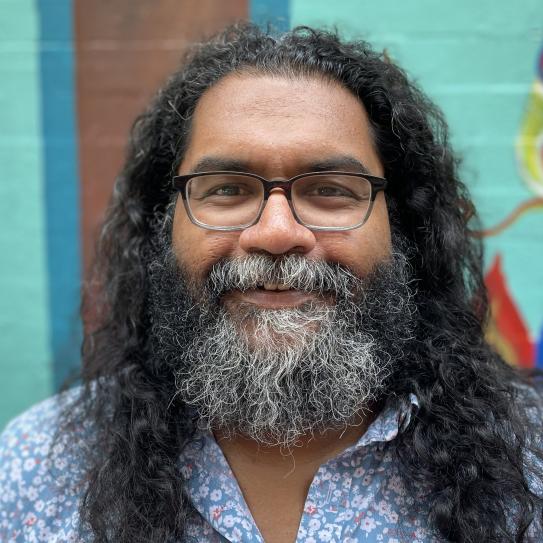
Manny Patole
Spring 2027 Urban Science Intensive II Instructor

Hanxue Wei
Fall 2026 Urban Science Intensive I Instructor
Manny Patole
Spring 2027 Urban Science Intensive II Instructor