

From Particle Clustering in Wind Tunnels to Bubble-Column Hydrodynamics
Abstract
Particle-laden turbulence often produces spatially concentrated clusters, and these structures can significantly influence particle transport. In this talk, Professor Martin Obligado, Professor of Fluid Mechanics at Centrale Lille Institut, will begin by presenting wind-tunnel experiments on inertial particles and droplets in turbulence generated by active and passive grids, as well as in wakes. Using particle imaging and Voronoï statistics, he will demonstrate how carrier-flow structure, mean shear, and large-scale motions shape particle clustering, as well as how clustering relates to settling and preferential sampling. These controlled experiments also provide insights into particle organization in atmospheric and environmental flows, including processes relevant to cloud droplets and aerosol transport.
He will then extend this investigation to gas–liquid flows in bubble columns, where buoyancy and bubble wakes produce collective structures that can transfer energy to the liquid, modify turbulence, and influence large-scale circulation and mixing. Drawing on experimental studies of bubble columns in the heterogeneous regime, Professor Obligado will discuss velocity scaling and the potential role of bubble clusters in determining column hydrodynamics, with implications for industrial gas–liquid reactors and processing systems.
Although particle and bubble clusters arise from different balances of inertia, buoyancy, and wake interactions, both systems reveal how dispersed-phase organization couples to momentum transfer. In particle-laden flows, turbulence organizes particles, while in bubble columns, organized bubbles can help drive and reshape turbulence. This perspective connects wind-tunnel studies of particle clustering with the collective dynamics of multiphase systems.
About the Speaker
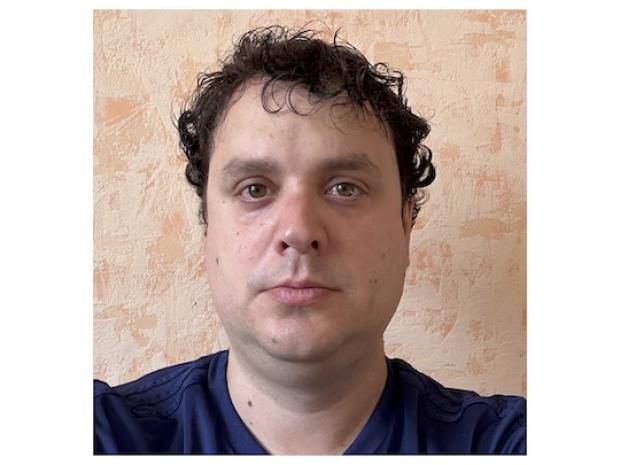
Martín Obligado is a Professor of Fluid Mechanics at Centrale Lille Institut, and a researcher at the Lille Fluid Mechanics Laboratory (LMFL). His research focuses on the physics of turbulent flows, with a particular interest in turbulence dynamics, multiphase flows, inertial particles, and their applications to environmental and industrial problems. His approach combines large-scale experiments, advanced measurement techniques, theoretical developments, and numerical collaborations to better understand the fundamental mechanisms of complex flows. Professor Obligado's current research focuses on particle-turbulence interactions, bubble flows, atmospheric turbulence, renewable energies, and the non-equilibrium dynamics of turbulent flows.