

Design Principle-Oriented Enzyme Engineering: Mutexa Platform and Applications
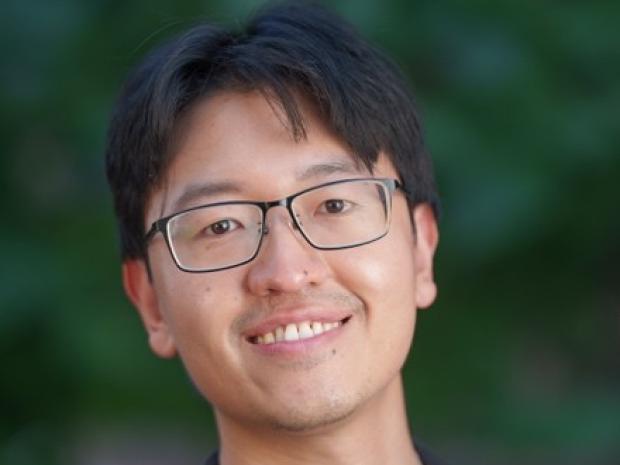
Speaker
Zhongyue (John) Yang
Department of Chemistry
Vanderbilt University
Abstract
Directed evolution has transformed enzyme engineering by repurposing native enzymes into biocatalysts that empower industrial and biomedical applications without requiring prior knowledge of the sequence–function relationships of enzyme catalysis. However, this mechanism-agnostic nature of directed evolution, often viewed as a key engineering advantage, becomes a fundamental limitation when screening is inefficient, misleading, or trapped in evolutionary dead ends. Although artificial intelligence (AI), such as protein language model and specialized machine-learning (ML) models, emerges to guide directed evolution through zero-shot library construction and active-learning optimization, its capacity to make reliable extrapolative predictions is fundamentally constrained by the small-data nature of biocatalysis, where functional datasets are sparse, biased toward well-studied scaffolds, and inconsistently annotated across substrates, assay conditions, and mutation contexts.
My group envision physics-based modeling, such as quantum chemistry and molecular dynamics, as a key driver for the next generation strategy of enzyme engineering. Its core advantage lies in generating mechanism-related molecular readouts, such as flexibility, electrostatics, substrate binding and positioning, and transition-state stabilization, that connect mutation effects to the physical origins of enzyme functions. Toward this vision, my group established Mutexa, a computational enzyme engineering ecosystem in which molecular readouts from high-throughput modeling are converted into design principles that are experimentally validated in my lab or through collaborations. In this talk, I will present the technical foundations of Mutexa and its applications in modifying enzyme’s native specificity, enhancing cold activity, predicting lasso peptide structures, and constructing protein-material assemblies. Together, these examples highlight Mutexa’s unique potential to establish a new paradigm in which enzyme engineering is guided not merely by functional screening, but by the discovery and application of transferable molecular design principles.
Speaker Biography
Zhongyue John Yang is the SC Family Dean’s Faculty Fellow, Assistant Professor of Chemistry, Chemical and Biomolecular Engineering at Vanderbilt University. He graduated from the inaugural Chemistry Po-Ling program at Nankai University in 2013, earned his Ph.D. in Theoretical and Computational Chemistry with Ken Houk at UCLA in 2017, and undertook postdoctoral training with Heather Kulik in the Department of Chemical Engineering at MIT from 2018 to 2020. Since fall 2020, he has started his independent research group at Vanderbilt and has published 38 peer-reviewed papers as an independent investigator.
His group seeks to establish a design principle-anchored paradigm for protein engineering (Nat. Comput. Sci. 2025). They established Mutexa, a physics-augmented AI platform for predicting and designing beneficial protein variants (J. Chem. Theory Comput. 2023 and Nat. Comput. Sci. 2026). Leveraging Mutexa, they established in silico tools for predicting the outcome of enzyme-catalyzed hydrolytic kinetic resolution (Chem. Sci. 2023), modifying enzymatic specificity (Chem. Catalysis 2025), designing cold adapted bidomain amylases (Angew. Chem. Int. Ed. 2025), predicting 3D structures of lasso peptides (Nat. Commun. 2025), and so on. His research is funded by U.S. National Science Foundation, National Institute of Health, and Rosetta Commons. He is a recipient of NIH MIRA Award in 2022, Robin Hochstrasser Young Investigator Award in 2023, ACS OpenEye Junior Faculty Award in Computational Chemistry in 2024, and Chinese-American Professor Association Distinguished Junior Faculty Award in 2026. He is a member of the Early Career Board for the Journal of Chemical Theory and Computation by the ACS Publications, guest-editing the special issue for “Modeling the Impact of Protein Mutations on Chemical Reactions”. He also serves on the editorial advisory board for UChem and Advanced BioManufacturing by Chinese Academy of Science.