

Molecular Bioengineering of CRISPR-Based Therapeutic, Gene Editing, and RNA-Targeting Biotechnologies
Speaker
Prof. Eric Josephs
Associate Professor
Department of Biomedical Engineering
Stony Brook University
Abstract
The field of medicine is undergoing a revolution in the treatment of genetic diseases: following the first successful demonstrations and FDA-approvals of CRISPR therapeutics — where a ribonucleoprotein (RNP) complex derived from bacterial clustered regularly interspaced short palindromic repeats (CRISPR)-associated (Cas) enzymes and their “guide RNA” (gRNA) co-factors are used to directly introduce specific genetic changes into a patient's DNA to resolve their symptoms — there is now a major push by the US federal government and industrial partners to dramatically expand the applications of CRISPR biotechnologies to treat and cure a myriad of chronic diseases. Genetic diseases affect 30 million individuals in the US (nearly 1 in 10 people) and impose significant morbidity and mortality; for 95% of these diseases, there are no other treatments, and CRISPR-based therapeutics alone may hold the potential for treatment and cure.
Despite the incredible pace of progress in developing CRISPR as a biotechnology over the past few years, there still remain critical bottlenecks –and underexplored opportunities – with regards to their molecular engineering to be overcome in order to reach these important goals. For example, during CRISPR biotechnology’s infancy and development, significant efforts went into extending its capabilities as broadly-applicable tool for biomedical research: in expanding the different types of sequences that can be target and spectrum of mutations that can be introduced, and in improving experimental speed/ease of use. Now that the same biomolecules are being adapted directly as therapeutics, an observation that motivates our research is that many of the advantages of CRISPR when optimized for applications as a broadly-applicable tool for biomedical research are instead significant disadvantages and liabilities: what is now of paramount importance is its safety by the limiting the potential for off-target mutations within the context of an individual’s unique genome, ensuring therapeutically-necessary mutagenic efficiencies can be achieved in a single dose, and controlled mutational outcomes that can to lead to a therapeutic effect. In this seminar we will discuss our lab’s recent work engineering CRISPR therapeutics to enable the rapid, universally-accessible, and on-demand generation of precision therapeutics for genetic diseases that are engineered to be extremely safe and effective within the context of each genetic disease and each patient's unique DNA, as well as our more recent work expanding into other diverse CRISPR effectors with emerging therapeutic applications including RNA-targeting CRISPR effectors.
Eric Josephs, PhD joined Stony Brook University Department of Biomedical Engineering in 2024 as an Empire Innovation Associate Professor. The Josephs lab's research focuses include engineering molecular biotechnologies to make gene therapies safer, more effective, and less expensive; understanding molecular mechanisms of genetic mutation and DNA repair; and synthetic biology. Prior to joining Stony Brook University, he was a faculty member in the Department of Nanoscience at the University of North Carolina at Greensboro in the Joint School of Nanoscience and Nanoengineering (JSNN); he was a postdoctoral research at Duke University in the Department of Mechanical Engineering and Materials Science, where he was a Ruth L. Kirschstein NRSA (NIH/F32) Postdoctoral Scholar and a Duke Scholar in Molecular Medicine (Oncology and Regenerative Medicine); and he completed his doctorate at the University of California, Merced with the Interdisciplinary Graduate Program in Biological Engineering and Small-scale Technologies (BEST).
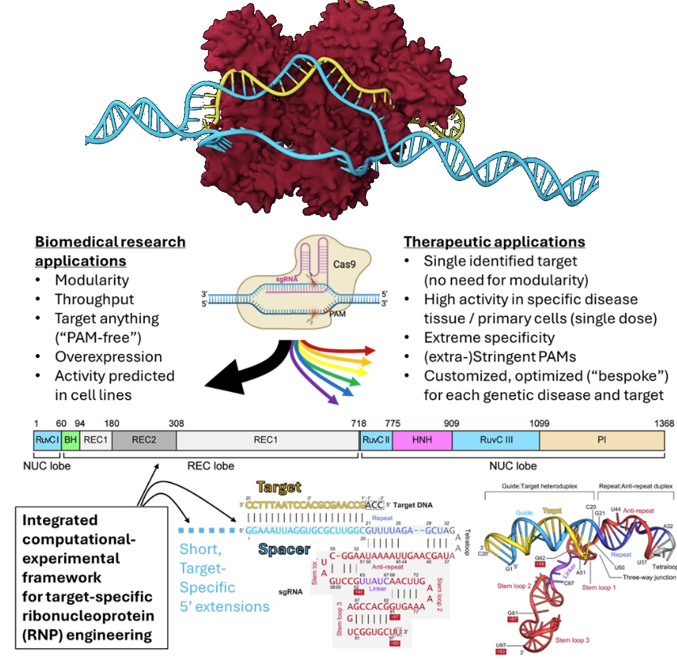
Integrated computational-experiential framework for target-specific ribonucleoprotein (RNP) engineering in short, target specific 5' extensions.