

Guiding lightning with High-Power Lasers: Experiments at Mount Säntis in Switzerland
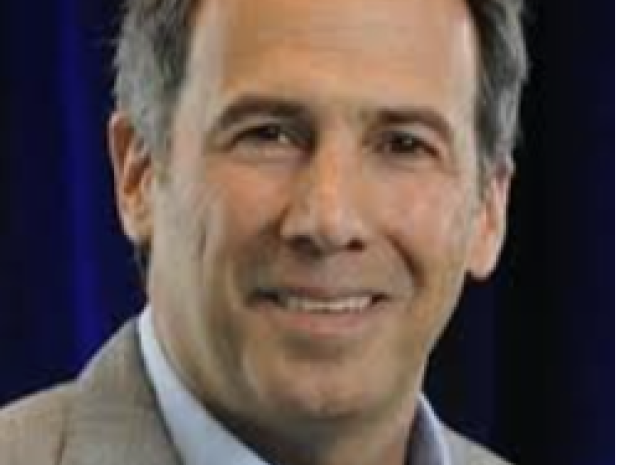
Speaker
Farhad Rachidi
Titular Professor and the head of the Electromagnetic Compatibility (EMC) Laboratory at EPFL, Lausanne, Switzerland
Title
"Guiding lightning with High-Power Lasers: Experiments at Mount Säntis in Switzerland"
Abstract
The Säntis lightning experimental research facility has been operational since 2010. The facility includes a 124-m tall tower (Säntis Tower) in Northeastern Switzerland, which is struck by lightning about 100 times a year. On the tower, Rogowski coils and B-dot sensors are installed at two different heights for lightning current and current derivative measurements. In addition, electric fields at different distances, x-ray detectors, acoustic sensors, as well as high speed cameras are installed at various stations around the tower. Instruments, such as VHF interferometric sensors and Lightning Mapping Arrays (LMA) have also been used temporarily in the past.
Since the instrumentation of the tower in 2010, more than a thousand lightning flashes have been successfully recorded. The obtained data have allowed to improve our understanding of lightning discharges and their various processes.
In this lecture, after a brief overview of lightning discharges, we will present the lightning experimental facility at Mount Säntis and highlight some of the key findings from the past ten years. We will then discuss in more details the experimental campaign carried out in 2021 in the framework of the European Laser Lightning Rod project (LLR). This experiment provided evidence that high-power lasers can guide lightning discharges over several tens of meters.
Speaker Bio
Farhad Rachidi (IEEE Fellow) received his Ph.D. degree in Electrical Engineering from the Swiss Federal Institute of Technology (EPFL), Lausanne, Switzerland, in 1991. He worked at the EPFL Power Systems Laboratory until 1996 and held several short-term research appointments at the University of Florida and NASA Kennedy Space Center. In 1997, he joined the Lightning Research Laboratory at the University of Toronto, Canada, and from April 1998 until September 1999, he worked at Montena EMC in Switzerland. He is currently a Titular Professor and the head of the Electromagnetic Compatibility (EMC) Laboratory at EPFL, Lausanne, Switzerland.
Professor Rachidi has authored or co-authored over 300 peer-reviewed journal articles and more than 400 conference papers. He has received numerous awards, including the 2005 IEEE EMC Technical Achievement Award, the 2005 CIGRE Technical Committee Award, the 2006 Blondel Medal from the French Association of Electrical Engineering, Electronics, Information Technology and Communication (SEE), the 2016 Berger Award from the International Conference on Lightning Protection, the Best Paper Award of the IEEE Transactions on EMC (2016 and 2018), and the Motohisa Kanda Award for the most cited paper of the IEEE Transactions on EMC (2012–2016 and 2014–2018). In recognition of his contributions, he was appointed Distinguished Honorary Professor at Tsinghua University in 2024 and Honorary Professor of Xi’an Jiaotong University, China, in 2014. In 2019, he became a member of the Academy of Sciences of Bologna Institute. He served as President of the Swiss National Committee of the International Union of Radio Science from 2012 to 2020, Vice-Chair of the European COST Action on the Physics of Lightning Flash and its Effects (2005–2009), Chairman of the 2008 European Electromagnetics International Symposium, and President of the International Conference on Lightning Protection (2008–2014). In editorial roles, he has been Deputy Editor-in-Chief of IET High Voltage (2016–present), Editor-in-Chief of IEEE Transactions on Electromagnetic Compatibility (2013–2015), and a member of its Advisory Board (2016–2021).