
Rapid Protein Biomarker Profiling for Precision Critical Care: Advances in Microfluidic Biosensing and Digital Immunoassay
Speaker
Prof. Katsuo Kurabayashi
Professor and Chair
Department of Mechanical and Aerospace Engineering
NYU Tandon School of Engineering
Abstract
Protein biomarker-guided precision medicine holds great promise for tailoring treatments to the specific pathological processes occurring in individual patients, thereby improving therapeutic efficacy while minimizing unnecessary or potentially harmful interventions. However, many acute inflammatory conditions arising from severe infections, trauma, surgery, immunotherapy, or organ transplantation remain underserved by precision medicine approaches due to the lack of suitable diagnostic technologies. Unlike cancer and other chronic diseases, for which diagnostic testing and treatment planning may extend over days to weeks, critically ill patients often require life-saving interventions within minutes to hours. This creates an urgent need for rapid, sensitive, and accurate biomarker measurement technologies that can be deployed near the point of care.
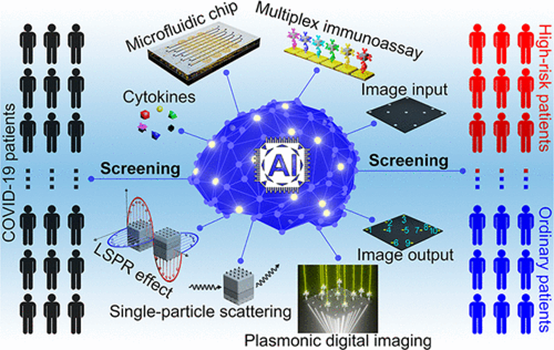
To address this challenge, our laboratory is developing advanced protein biomarker detection platforms that integrate microfluidics, functional nanomaterials, digital immunoassays, and machine learning-based image analysis. These technologies are designed to combine high analytical sensitivity and specificity with rapid detection, multiplexing capabilities, and cost-effective operation, enabling timely assessment of inflammatory responses and therapeutic outcomes. This presentation will highlight recent technological advances in our laboratory and discuss their translational potential for monitoring cytokine release syndrome (CRS) and neurotoxicity associated with chimeric antigen receptor (CAR) T-cell therapy, as well as for the diagnosis and management of sepsis and pediatric acute respiratory distress syndrome (PARDS).
Katsuo Kurabayashi is Professor and Chair of Mechanical and Aerospace Engineering at NYU Tandon School of Engineering. Prior to NYU Tandon, he was Professor of Mechanical Engineering and Electrical Engineering and Computer Science at the University of Michigan, Ann Arbor. He received his BS in Precision Engineering from the University of Tokyo in 1992, and his MS and PhD in Materials Science and Engineering from Stanford University, CA, in 1994 and 1998, respectively. His current research focuses on optofluidics, nanoplasmonic and biomolecular biosensing, and BioMEMS/microsystems for immunoassay, clinical diagnosis, single-cell study, and analytical chemistry. He authored and co-authored more than 150 peer-reviewed papers and holds 15 U.S. patents. He received the 2001 NSF Early Faculty Career Development (CAREER) Award, and the Robert Caddell Memorial Award in 2005, the Pi Tau Sigma Outstanding Professor Award in 2007, the University of Michigan Mechanical Engineering Outstanding Achievement Award in 2013, the Ted Kennedy Award in 2015, and the Wise-Najafi Prize for Engineering Excellence in the Miniature World in 2019 from the College of Engineering at the University of Michigan.