
Using programmable signaling to tune therapeutic immune cell state
Speaker
Prof. Kyle Daniels
Assistant Professor
Department of Genetics
Stanford University
Abstract
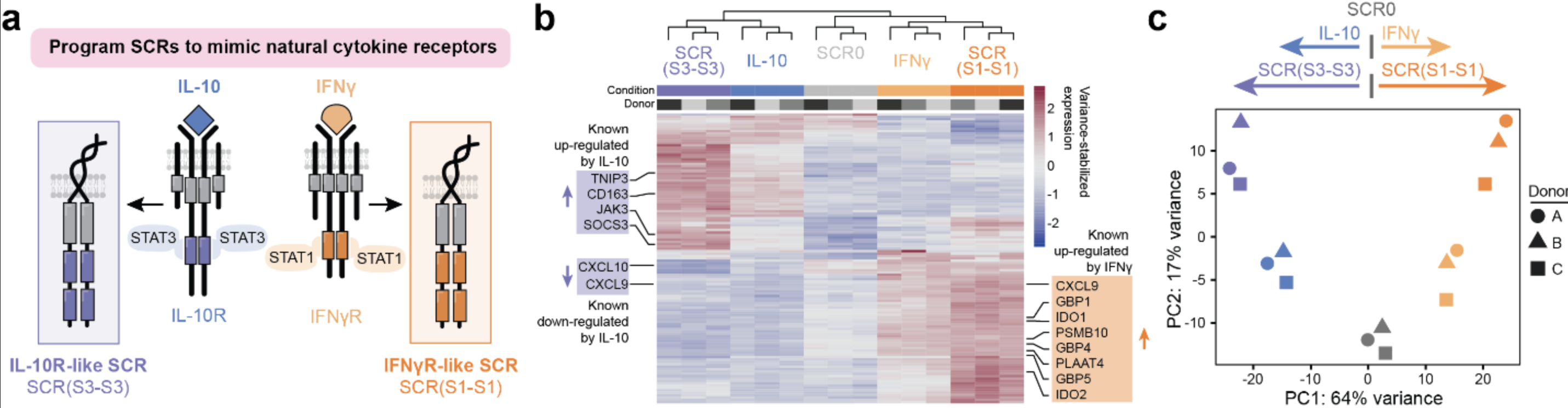
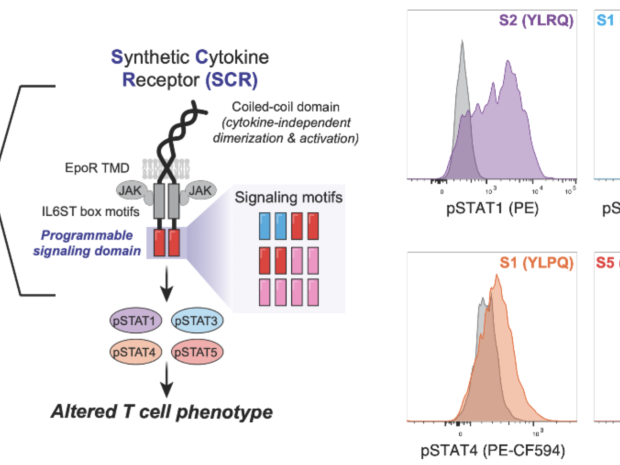
Natural cytokine receptors use a limited set of short intracellular signaling motifs to encode diverse cell states. We built Programmable Activators of Cell Signaling (PACS) — chimeric receptors that constitutively activate signaling through user-defined combinations of these motifs, independent of external cytokines. Testing 457 PACS constructs in CAR T cells showed that motif recombination tunes STAT phosphorylation and spans a broad phenotypic spectrum; models trained on these data guided design of PACS that increase memory and cytotoxicity while reducing toxicity. The platform generalizes to primary human macrophages, where motif combinations program polarization and phagocytic capacity, and PACS-engineered CAR-macrophages reduced tumor burden 30-fold in mice. PACS thus provide a programmable layer for co-optimizing immune cell function across lineages.
Dr. Kyle Daniels obtained his BS in Biochemistry from the University of Maryland College Park in 2010, conducting undergraduate research with Dr. Dorothy Beckett, PhD. He obtained his PhD in Biochemistry with a certificate in Structural Biology and Biophysics in the laboratory of Dr. Terrence G. Oas, PhD. Kyle performed postdoctoral training with Dr. Wendell A. Lim, PhD at UCSF studying how CAR T cell phenotype is encoded by modular signaling motifs within chimeric antigen receptors. The Daniels lab is interested in harnessing the principles of modularity to engineer receptors and gene circuits to control cell functions. The lab uses synthetic biology, medium- and high-throughput screens, and machine learning to: (1) Engineer immune cells to achieve robust and durable responses against various cancer targets, (2) Coordinate behavior of multiple engineered cell types in cancer, autoimmune disease, and payload delivery, (3) Control survival, proliferation, and differentiation of hematopoietic stem cells (HSCs) and immune cells, and (4) Explore principles of modularity related to engineering receptors and gene circuits in mammalian cells.