

Ayaskanta Sahu
-
Undergraduate Studies Director
-
Associate Professor

Ayaskanta Sahu is an Associate Professor in the Department of Chemical and Biomolecular Engineering at NYU Tandon School of Engineering. His research focuses on investigating transport phenomena in new classes of nanostructured hybrid materials that have promise for optoelectronic and thermoelectric energy conversion.
Prior to joining NYU, he was a Materials Post-Doctoral Fellow at the Molecular Foundry, Lawrence Berkeley National Laboratory in Berkeley, California. He holds a B. Tech. degree in Chemical Engineering from the Indian Institute of Technology Roorkee and a Ph.D. in Chemical Engineering from the University of Minnesota. He spent a couple of years at ETH Zurich as a visiting scientist before joining the Molecular Foundry.
Education
Indian Institute of Technology, Roorkee, 2007
Bachelor of Technology, Chemical Engineering
University of Minnesota, Twin Cities, 2012
Doctor of Philosophy, Chemical Engineering
Experience
University of Minnesota, Twin Cities
Research and Teaching Assistant
From: September 2007 to November 2012
ETH Zurich
Visiting Scientist
From: May 2011 to March 2013
Lawrence Berkeley National Laboratory
Materials Post-doctoral Fellow
From: May 2013 to December 2016
New York University
Assistant Professor
From: January 2017 to present
Publications
Journal Articles
“Bottom-up design of de novo thermoelectric hybrid materials using chalcogenide resurfacing”, A. Sahu, B. Russ , N. Su , J. D. Forster , P. Zhou , E. S. Cho , P. Ercius , N. E. Coates , R. A. Segalman and J. J. Urban, J. Mater. Chem. A, 2017, DOI: 10.1039/C6TA09781B
"Carrier Scattering at Alloy Nanointerfaces Enhances Power Factor in PEDOT: PSS Hybrid Thermoelectrics”, E. W. Zaia, A. Sahu, P. Zhou, M. P. Gordon, J. D. Forster, Y. Liu, J. Guo, and J. J. Urban, Nano Lett., 2016, 16 (5), 3352
“Charge Trapping Defects in CdSe Quantum Dots," A. J. Almeida, A. Sahu, D. J. Norris, M. S. Brandt, M. Stutzmann, and R. N. Pereira, J. Phys. Chem. C., 2016, 120 (25), 13763
“Soft PEDOT: PSS Aerogel Architectures for Thermoelectric Applications,” M. P. Gordon, E. W. Zaia, P. Zhou, B. Russ, N. E. Coates, A. Sahu, and J. J. Urban, J. Appl. Polym. Sci., 2016, 44070. DOI: 10.1002/app.44070
“Localization of Ag Dopant Atoms in CdSe Nanocrystals by Reverse Monte Carlo Analysis of EXAFS Spectra," A. Kompch, A. Sahu, C. Notthoff, F. Ott, D. J. Norris and M. Winterer, J. Phys. Chem. C., 2015, 119 (32), 18762
“Engineering Synergy: Energy and Mass Transport in Hybrid Nanomaterials," E. S. Cho, N. E. Coates, J. D. Forster, A. M. Ruminski, Boris Russ, A. Sahu, N. C. Su, F. Yang, and J. J. Urban, Adv. Mater., 2015, 27 (38), 5744 (Invited Article, Equal Contribution, Author List in α-order)
“Carrier Lifetime Enhancement in a Tellurium Nanowire/PEDOT:PSS Nanocomposite by Sulfur Passivation," J. Heyman, A. Sahu, N. E. Coates, B. Ehmann, and J. J. Urban, MRS Proc., 2015, 1742, mrsf14-1742-bb04-02
“Broadband Up-Conversion at Subsolar Irradiance: Triplet–Triplet Annihilation Boosted by Fluorescent Semiconductor Nanocrystals," A. Monguzzi, D. Braga, M. Gandini, V. C. Holmberg, D. K. Kim, A. Sahu, D. J. Norris, and F. Meinardi, Nano Lett., 2014, 14 (11), 6644
“Complex Chiral Colloids and Surfaces via High-Index Off-Cut Silicon,” K. M. McPeak, C. D. van Engers, M. Blome, J. H. Park, S. Burger, M. A. Gosálvez, A. Faridi, Y. R. Ries, A. Sahu, and D. J. Norris, Nano Lett., 2014, 14 (5), 2934
“Solid-Phase Flexibility in Ag2Se Semiconductor Nanocrystals,” A. Sahu, D. Braga, O. Waser, M. S. Kang, D. Deng, and D. J. Norris, Nano Lett., 2014, 14 (1), 115
“Influence of Silver Doping on Electron Transport in Thin Films of PbSe Nanocrystals,” M.S. Kang, A. Sahu, C.D. Frisbie and D.J. Norris, Adv. Mater., 2013, 25 (5), 725
“Electronic Impurity Doping in CdSe Nanocrystals," A. Sahu, M.S. Kang, A. Kompch, C. Notthoff, A.W. Wills, D. Deng, M. Winterer, C.D. Frisbie and D.J. Norris, Nano Lett., 2012, 12 (5), 2587 (Highlighted in Nature Materials, 2012, 11, 486)
“Quantum Confinement in Silver Selenide Semiconductor Nanocrystals," A. Sahu, A. Khare, D. Deng and D.J. Norris, Chem. Comm., 2012, 48, 5458
“Synthesis and Characterization of Al- and In-doped CdSe Nanocrystals," A.W. Wills, M.S. Kang, K.M. Wentz, S.E. Hayes, A.Sahu, W.L. Gladfelter and D.J. Norris, J. Mater. Chem., 2012, 22, 6335
“Size- and Temperature-Dependent Charge Transport in PbSe Nanocrystal Thin Films,” M.S. Kang, A. Sahu, D.J. Norris and C.D. Frisbie, Nano Lett., 2011, 11 (9), 3887
“Facile Synthesis of Silver Chalcogenide (Ag2E, E = S , Se and Te) Semiconductor Nanocrystals,” A.Sahu, L. Qi, M.S. Kang, D. Deng, and D.J. Norris, J. Am. Chem. Soc., 2011, 133(17), 6509
“Size-dependent Electrical Transport in CdSe Nanocrystal Thin-films,” M.S. Kang, A. Sahu, D.J. Norris and C.D. Frisbie, Nano Lett., 2010, 10 (9), 3727
Research News
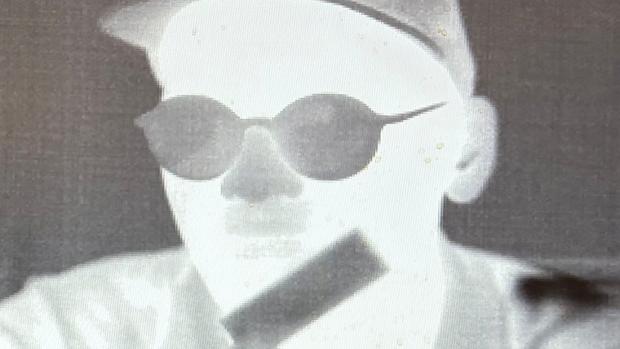
An eco-friendly way to see in the dark
Manufacturers of infrared cameras face a growing problem: the toxic heavy metals in today's infrared detectors are increasingly banned under environmental regulations, forcing companies to choose between performance and compliance.
This regulatory pressure is slowing the broader adoption of infrared detectors across civilian applications, just as demand in fields like autonomous vehicles, medical imaging and national security is accelerating.
In a paper published in ACS Applied Materials & Interfaces, researchers at NYU Tandon School of Engineering reveal a potential solution that uses environmentally friendly quantum dots to detect infrared light without relying on mercury, lead, or other restricted materials.
The researchers use colloidal quantum dots which upends the age-old, expensive, and tedious processing of infrared detectors. Traditional devices are fabricated through slow, ultra-precise methods that place atoms almost one by one across the pixels of a detector — much like assembling a puzzle piece by piece under a microscope.
Colloidal quantum dots are instead synthesized entirely in solution, more like brewing ink, and can be deposited using scalable coating techniques similar to those used in roll-to-roll manufacturing for packaging or newspapers. This shift from painstaking assembly to solution-based processing dramatically reduces manufacturing costs and opens the door to widespread commercial applications.
"The industry is facing a perfect storm where environmental regulations are tightening just as demand for infrared imaging is exploding," said Ayaskanta Sahu, associate professor in the Department of Chemical and Biomolecular Engineering (CBE) at NYU Tandon and the study's senior author. "This creates real bottlenecks for companies trying to scale up production of thermal imaging systems."
Another challenge the researchers addressed was making the quantum dot ink conductive enough to relay signals from incoming light. They achieved this using a technique called solution-phase ligand exchange, which tailors the quantum dot surface chemistry to enhance performance in electronic devices. Unlike traditional fabrication methods that often leave cracked or uneven films, this solution-based process yields smooth, uniform coatings in a single step — ideal for scalable manufacturing.
The resulting devices show remarkable performance: they respond to infrared light on the microsecond timescale — for comparison, the human eye blinks at speeds hundreds of times slower — and they can detect signals as faint as a nanowatt of light.
"What excites me is that we can take a material long considered too difficult for real devices and engineer it to be more competitive," said graduate researcher Shlok J. Paul, lead author on the study. "With more time this material has the potential to shine deeper in the infrared spectrum where few materials exist for such tasks."
This work adds to earlier research from the same lead researchers that developed new transparent electrodes using silver nanowires. Those electrodes remain highly transparent to infrared light while efficiently collecting electrical signals, addressing one component of the infrared camera system.
Combined with their earlier transparent electrode work, these developments address both major components of infrared imaging systems. The quantum dots provide environmentally compliant sensing capability, while the transparent electrodes handle signal collection and processing.
This combination addresses challenges in large-area infrared imaging arrays, which require high-performance detection across wide areas and signal readout from millions of individual detector pixels. The transparent electrodes allow light to reach the quantum dot detectors while providing electrical pathways for signal extraction.
"Every infrared camera in a Tesla or smartphone needs detectors that meet environmental standards while remaining cost-effective," Sahu said. "Our approach could help make these technologies much more accessible."
The performance still falls short of the best heavy-metal-based detectors in some measurements. However, the researchers expect continued advances in quantum dot synthesis and device engineering could reduce this gap.
In addition to Sahu and Paul, the paper's authors are Letian Li, Zheng Li, Thomas Kywe, and Ana Vataj, all from NYU Tandon CBE. The work was supported by the Office of Naval Research and the Defense Advanced Research Projects Agency.
Paul, S. J., Li, L., Li, Z., Kywe, T., Vataj, A., & Sahu, A. (2025). Heavy Metal Free Ag2Se Quantum Dot Inks for Near to Short-Wave Infrared Detection. ACS Applied Materials & Interfaces. doi:10.1021/acsami.5c12011

NYU Tandon engineers develop new transparent electrode for infrared cameras
Infrared imaging helps us see things the human eye cannot. The technology — which can make visible body heat, gas leaks or water content, even through smoke or darkness — is used in military surveillance, search and rescue missions, healthcare applications and even in autonomous vehicles.
These capabilities come with an engineering challenge, however. Infrared cameras need electrical contacts to capture and transmit the images they detect. Most materials that can conduct electrical signals also block the majority of infrared radiation from reaching the sensor, creating a fundamental conflict between seeing infrared light and having the electrical connections needed to process that information.
To solve this, researchers at NYU Tandon School of Engineering have developed a transparent electrode made from embedding tiny silver wires, similar in width to human hair, into a transparent plastic matrix that can be simply deposited on top of conventional infrared detectors.
The research, published in the Journal of Materials Chemistry C and recently selected as a HOT article by the journal's editors, tackles a key challenge in infrared detector manufacturing.
"We've developed a material that solves a fundamental problem that has been limiting infrared detector design," said Ayaskanta Sahu, associate professor in the Department of Chemical and Biomolecular Engineering (CBE) at NYU Tandon and the study's senior author. "Our transparent electrode material works well across the infrared spectrum, giving engineers more flexibility in how they build these devices."
The researchers tested their material by building it into infrared cameras that use colloidal quantum dots as the light-responsive material. These are tiny engineered particles that have recently gained attention for their use in quantum dot televisions and their role in earning the 2023 Nobel Prize in Chemistry. For this study, the group specifically used tiny clusters of mercury telluride, a type of quantum dot that responds to various wavelengths of infrared light.
Their new approach represents a significant improvement over existing methods. Traditional infrared photodetectors have relied on expensive materials like indium tin oxide (ITO) or thin metal films, which either lose transparency in longer infrared wavelengths or suffer from poor electrical properties and must be rigid.
Measuring 120 nanometers in diameter and 10-30 micrometers in length, the silver nanowires form conductive networks even at relatively low concentrations. When embedded in the PVA matrix, they form a silvery conductive ink that can be sprayed or spun onto infrared detectors as stable and flexible films that can even be manufactured at the low temperatures needed for quantum dot processing.
"Conventional electrodes in the infrared are like blackout curtains — most of the signal never reaches the sensor," said graduate researcher Shlok J. Paul, a co-author on the study. "Our near-invisible web of silver nanowires lets more infrared photons in while doubling as the wiring that carries the electrical current needed to turn the invisible light into data. While there is more work to be done, the simplicity of this flexible layer could carry IR detection from the lab to commercial applications like for firefighter vision or self-driving cars.”
In addition to Sahu and Paul, the paper's authors are Elisa Riedo, Herman F. Mark Professor in NYU Tandon's CBE Department, and graduate students Håvard Mølnås, Steven L. Farrell, and Nitika Parashar, all from CBE as well.
The work was supported by the Defense Advanced Research Projects Agency, the Office of Naval Research, the US Army Research Office, and the National Science Foundation.
The researchers filed a U.S. patent application covering their method for embedding silver nanowires in a polymer matrix for transparent infrared electrodes.
Paul, Shlok J., et al. “Plenty of room at the top: Exploiting nanowire – polymer synergies in transparent electrodes for infrared imagers.” Journal of Materials Chemistry C, vol. 13, no. 21, 2025, pp. 10592–10601
Research Centers, Labs, and Groups