


Overview
As a master’s student in Chemical Engineering at NYU Tandon, you will bridge the gap between molecular discoveries and large-scale industrial technologies. You will learn to formulate advanced chemical processes, design smart biomaterials, optimize electrochemical and energy systems, and engineer sustainable solutions for society’s most critical challenges. Through rigorous laboratory coursework, faculty mentorship, and options for cutting-edge thesis or guided research, you will build the mathematical depth, computational modeling expertise, and experimental versatility needed to lead innovation across pharmaceuticals, biotechnology, advanced materials, and environmental sustainability.
Prerequisites
Applicants are generally expected to hold an undergraduate degree in chemical engineering or a closely related field of engineering or physical science from an accredited institution. Students from non-engineering backgrounds are also strongly encouraged to apply. Upon enrollment, these students will be encouraged to take our foundation coursework to help them transition into the master's program in Chemical Engineering.
Application Requirements
- Online application
- Official transcripts
- Resume
- Statement of purpose
- 2 Letters of recommendation (optional for M.S. applicants)
- English Language Proficiency Testing (where applicable)
- $90 Application fee
Find out more about Admission Requirements.
Tuition varies based on your program, term admitted and credit hours.
We are committed to keeping graduate studies affordable for all of our students. You’ll have access to on-campus employment programs that include course and research assistantships, as well as financial aid, scholarships, grants, and loans.
Explore our Tuition, Financial Aid, and Scholarships page to learn more about these opportunities.
Prospective Students
For questions about the application process, application status, or to talk to an admissions counselor:
Office of Graduate Enrollment and Admissions
NYU Tandon School of Engineering
engineering.gradinfo@nyu.edu
646-997-3182
Accepted and Enrolled Students
For general program inquiries, degree advisement, and curriculum planning:
Jin Ryoun Kim
Academic Director and Associate Professor
Department of Chemical and Biomolecular Engineering
jin.kim@nyu.edu
646-997-3719
At a Glance
#42
Best Engineering School in the Nation
(U.S. News & World Report)
#30
Best Chemical Engineering Program
(U.S. News & World Report)
100%
of Chemical Engineering M.S. students work with faculty on research projects
Market Outlook
NYC Advantage
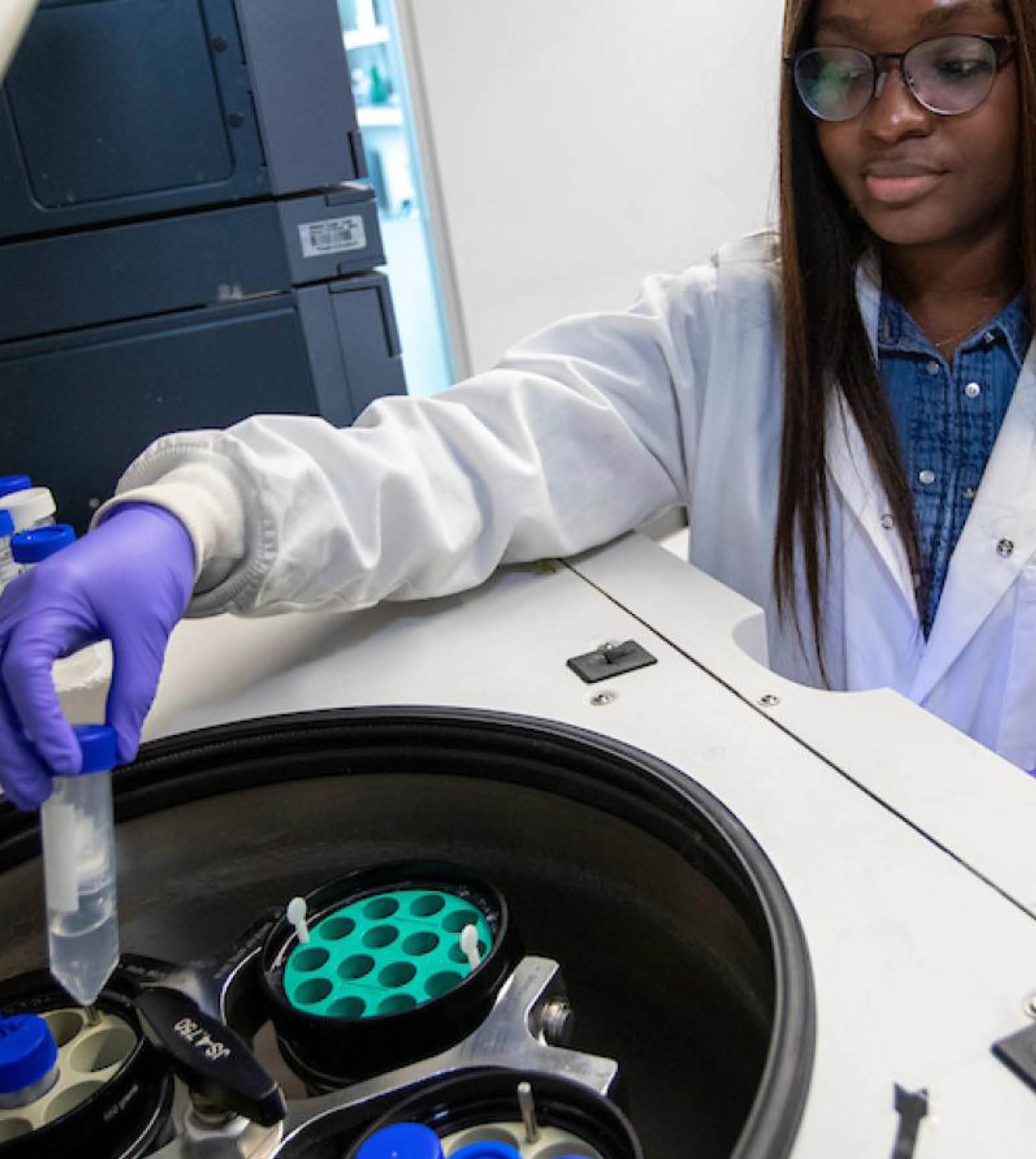
Studying chemical engineering at NYU Tandon means you'll be immersed directly in New York City’s thriving applied science, green tech, and advanced manufacturing landscape. From pioneering biotech incubators and leading pharmaceutical R&D laboratories to municipal sustainability programs and regional clean-energy initiatives, the metropolitan area serves as an active testing ground for chemical innovation. Students collaborate with faculty on high-impact projects, engage with industrial partners across the tri-state area, and leverage local technology incubators — such as the NYU Future Labs and local life-science spaces — to bring sustainable materials and scalable process designs to urban systems and global markets.

Curriculum
The program requires the completion of 30 credits, and students must select one of two pathways for completion:
- Guided Studies
- Thesis
| Requirement Area | Credits |
|---|---|
| Core Courses | 12 |
| CBE Electives | 6 |
| Free Electives | 6 |
| Guided Studies | 6 |
| Total Credits | 30 |
| Requirement Area | Credits |
|---|---|
| Core Courses | 12 |
| CBE Electives | 6 |
| Free Electives | 3 |
| Thesis | 9 |
| Total Credits | 30 |
Elective Emphasis Areas
Free Elective courses may be chosen from other departments and schools of NYU, with advisor approval.
Meet our Faculty


Student Research




Biotechnology, M.S.

Biotechnology and Entrepreneurship, M.S.

Chemical Engineering, Ph.D.
To earn a Master of Science in Chemical Engineering, you must complete 30 credits of graduate coursework.
Credit Distribution (30 Credits)
- 12 credits of core courses
- 6 credits of department electives
- 3-6 credits of free electives (depending on whether you opt to complete a thesis)
- 6 credits of Guided Studies or 9 Master's Thesis credits
The M.S. in Chemical Engineering is offered as an on-campus program at NYU Tandon’s Brooklyn campus. Both full-time and part-time study options are available to accommodate recent graduates as well as working engineering professionals. Full-time students typically complete the degree in 3 to 4 semesters.
Fall Semester:
- December 1 (Priority Consideration)
- February 15 (General Consideration)
Spring Semester:
- November 1
Applicants must submit:
- Online application
- Official transcripts
- Resume
- Statement of purpose
- 2 Letters of recommendation (optional for M.S. applicants)
- English Language Proficiency Testing (where applicable)
- $90 Application fee
Students have access to specialized facilities within the Department of Chemical and Biomolecular Engineering and across the NYU campus. These include advanced wet chemical synthesis laboratories, characterization suites, the NYC Center for Healthier Plastic Solutions, surface chemistry and colloids facilities, biomolecular and microfluidics instrumentation, as well as collaborative fabrication resources at the NYU MakerSpace.