


Overview
NYU Tandon transportation engineers design, optimize, and modernize the complex mobility networks that keep global cities moving. In the M.S. in Transportation Systems program, you will gain an advanced mastery of multimodal mobility modeling, traffic operations and control, and intelligent transportation systems (ITS). You will choose one of two concentrations in Mobility Systems Engineering or Transportation Systems Management and learn how to turn data-driven transit theory into sustainable, real-world urban solutions.
Prerequisites
Students must hold a bachelor’s degree from an accredited institution with a strong academic background in engineering, science, or a related quantitative field. A minimum undergraduate GPA of 3.0 on a 4.0 scale is generally required. Applicants should demonstrate prior foundational knowledge in:
- One year of college-level calculus
- One year of college-level physical science
- One semester of engineering-level probability and statistics
- One semester of computer programming
Application Requirements
- Online application
- Transcripts from all previously attended institutions
- Resumé/CV
- Personal Statement
- Letters of Recommendation (optional)
- English language proficiency testing (if required)
- $90 Application fee
Find out more about Admission Requirements.
Tuition varies based on your program, term admitted and credit hours.
We are committed to keeping graduate studies affordable for all of our students. You'll have access to on-campus employment programs that include teaching and research assistantships, as well as financial aid, scholarships, grants, and loans.
Explore our Tuition, Financial Aid, and Scholarships page to learn more about these opportunities.
Prospective Students
For questions about the application process, application status or to talk to an admissions counselor:
Office of Graduate Enrollment and Admissions
NYU Tandon School of Engineering
engineering.gradinfo@nyu.edu
646-997-3812
Accepted and Enrolled Students
For questions about the curriculum, advisement, or courses:
Department of Civil, Urban, and Environmental Engineering
NYU Tandon School of Engineering
6 MetroTech Center, Jacobs Hall RH 400
Brooklyn, NY 11201
cuee@nyu.edu
646-997-3577
For advising questions:
Professor Joseph Chow
Associate Professor & M.S. Transportation Systems Academic Director
joseph.chow@nyu.edu
646-997-4030
At a Glance
#42
Best Engineering Graduate Schools in the Nation
U.S. News & World Report
Top 50
Best Civil & Transportation Engineering Programs
U.S. News & World Report
#1
NYC is the largest transportation network in North America
MTA
Market Outlook

The NYC Advantage
New York City is one of the world’s major transportation hubs, and NYU Tandon transportation systems students study it up close. The city’s extensive transit networks, international airports, and major seaport offer a rich setting for examining how people and goods move. Studying in Brooklyn places you near research centers like C2SMART and connects you directly to the MTA, the Port Authority of NY & NJ, NYC DOT, and leading transportation tech and consulting firms.

Curriculum
The M.S. in Transportation Systems at NYU aims to equip students with the necessary knowledge to tackle the challenges inherent to this new era of urban mobility. The program, shaped by immersion in one of the largest metropolitan cities in the world, will provide students with a truly multidisciplinary education. They will gain solid technical foundations as transportation engineers, but also engage with other fields such as data science, operations research, economics, and public policy, to solve the pressing urban mobility challenges of the 21st century. Thus, our graduates will be able to bring their talents to engineering and technology companies; public agencies; and academia.
| Requirement Area | Credits |
|---|---|
| Core Course | 3 |
| Concentration Courses | 9 |
| Capstone | 3 |
| Department Electives | 6 |
| General Electives | 9 |
| Total Credits | 30 |
Up to six credits may be taken for an MS thesis (TR-GY 997X) with a thesis supervisor. A student choosing this alternative may opt out of Transportation Capstone, TR-GY 6403.
Up to nine credits may be taken from outside the civil engineering department, with the approval of the program director. Students typically take outside courses from CUSP, Wagner, Stern, the Department of Technology Management and Innovation at Tandon, or other areas that supplement the program along the student’s interests.
Master's students who wish to continue onto a Ph.D. in Transportation Systems at NYU and have been accepted into the program by the time of the qualifying exam at the end of the Spring semester are eligible to take it.
focus on courses in traffic and transit operations, control, and mobility systems design. Students are expected to gain the knowledge and skills to become transportation systems engineers, mobility data scientists, transportation modelers, or traffic engineers.
focus on managerial analytics and decision support for policymaking involving transportation systems. Students are expected to gain the knowledge and skills to become transportation or mobility systems managers, transportation policy analysts, or project managers for transportation infrastructure operations and design.
NYU Tandon Transportation Group
NYU Tandon has the leading transportation engineering and planning program in the northeast and is home to the C2SMART University Transportation Center. Transportation students at NYU live and work in the epicenter of one of the largest and most complex urban transportation networks in the world, using New York City as a living laboratory to learn about and study today's most pressing transportation issues. Our esteemed faculty offer a wealth of expertise, training students in everything from the fundamentals of traffic engineering to the latest in smart cities technology.
Meet our Faculty, Students, and Alumni


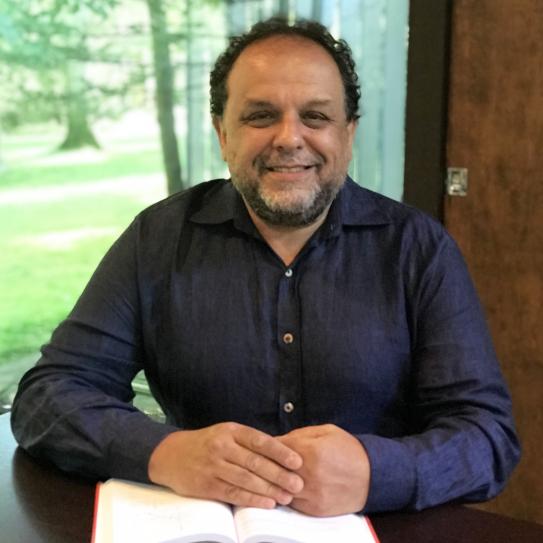


Student Life in Transportation Engineering



Civil Engineering, M.S.

Traffic Engineering, AC

Transportation Systems, Ph.D.
To earn a Master of Science in Transportation Systems, students must complete 30 credits (comprised of 15-18 credits of core and concentration requirements, along with departmental and general electives) while maintaining a minimum cumulative GPA of 3.0.
The M.S. in Transportation Systems is offered on-campus with flexible scheduling options for full-time or part-time study. Full-time students typically complete the degree in 3 to 4 semesters.
Fall Semester:
- December 1 (Priority Consideration)
- February 15 (General Consideration)
Spring Semester: November 1
- Online application
- Transcripts from all previously attended institutions
- Resumé/CV
- Personal Statement
- Letters of Recommendation (optional)
- English language proficiency testing (if required)
- $90 Application fee
The primary goal of the M.S. in Transportation Systems program is to educate forward-thinking transportation professionals to plan, functionally design, control, and operate facilities, networks, and services that meet modern passenger and freight mobility demands.
Our curriculum prepares you to become a transportation systems engineer, mobility data scientist, transportation modeler, or traffic engineer by developing four core competencies:
- Supply and Demand Dynamics: Develop a fundamental understanding of the nature of transportation supply and demand, their complex interactions, and how user behavior shapes network performance.
- Systems Design and Analysis: Functionally design, model, and evaluate diverse mobility facilities and networks, including public transit systems, on-demand and micro-mobility services, and freight logistics and delivery operations.
- Data-Driven Performance and Operations: Leverage modern computational tools, sensing networks, and diverse mobility data sources to assess system-wide performance and implement advanced supply- and demand-management strategies.
- Policy and Economic Context: Analyze the economic mechanisms, regulatory frameworks, and political forces that govern infrastructure investment, service deployment, and public-private mobility systems.
Students collaborate closely with cutting-edge university centers and labs, notably the C2SMART University Transportation Center (a Tier 1 USDOT University Transportation Center headquartered at NYU), the Behavioral Urban Informatics, Logistics, and Transport (BUILT) Laboratory, the Center for Urban Science and Progress (CUSP), and the NYU Tandon MakerSpace.
Our alumni apply their graduate training across public sector agencies, transportation consultancies, private technology leaders, and doctoral research institutions. Representative career outcomes and thesis research include:
- Chetan Sharma (MS ’23): Transportation Engineer at VHB; former FHWA Dwight David Eisenhower Transportation Fellow
- Zhuo Hao (Allen) Zhang (MS ’22): Engineering Associate at Burns Engineering
- Patrick Scalise (MS ’21): Transportation Planner at the Metropolitan Transportation Authority (MTA); authored the graduate thesis "Paratransit operations design with disease contact exposure"
- Sofia Duran (MS ’21): Engineer III at Toole Design Group
- William Wong (MS ’21): Community Planner (Travel Forecast) at the Federal Transit Administration (FTA)
- Ziyi Ma (MS ’20): Research Engineer II at BlueHalo; former FHWA Dwight David Eisenhower Transportation Fellow
- Srushti Rath (MS ’20, PhD ’22): Research Scientist at Amazon; authored the graduate thesis "Air taxi skyport location problem for airport access"
- Nick Caros (MS ’19): Ph.D. Candidate at the Massachusetts Institute of Technology (MIT); authored the graduate thesis "Dynamic operations of a mobility service with en-route transfers"
- Heba Omholt (MS ’18): Market Insights Analyst at Lyft; former FHWA Dwight David Eisenhower Transportation Fellow
To earn your Master of Science degree, you must complete 30 total credits of graduate coursework, satisfy concentration-specific core courses, and meet departmental academic standing standards.
Academic Standing & GPA Requirements
- Cumulative GPA: You must maintain a minimum cumulative GPA of 3.0 or higher across all graduate courses, as well as a separate 3.0 GPA or higher across all guided studies (readings, projects, and theses). Averages for coursework and guided studies are calculated independently. Transfer credits from other institutions are excluded from these GPA computations.
- Degree Coursework GPA: You must earn an overall 3.0 GPA across all specific courses required for this degree.
- Course Repeat Limit: You may not repeat any course that counts toward the degree program more than once.
Coursework & Concentration Structure (15–18 Credits Core)
In total, the degree includes 5 required core courses (15-18 credits). All enrolled students complete the same two universal core courses, with the remaining three determined by your chosen concentration:
- Universal Core: 2 foundational courses completed by all students in the program.
- Concentration A: Mobility Systems Engineering (3 Courses):
Focuses on traffic and transit operations, traffic control, and advanced mobility systems design. This track prepares you for roles as transportation systems engineers, mobility data scientists, transportation modelers, and traffic engineers. - Concentration B: Transportation Systems Management (3 Courses):
Emphasizes managerial analytics, economic frameworks, and decision-support systems for transportation infrastructure policymaking. This concentration prepares you for careers as transportation or mobility systems managers, transportation policy analysts, and infrastructure operations project managers.
Thesis, Capstone & Outside Elective Options
- Master’s Thesis Option: You may take up to 6 credits of M.S. thesis research (TR-GY 997X) under the supervision of a faculty thesis adviser. Electing the thesis pathway allows you to opt out of the standard Transportation Capstone course (TR-GY 6403).
- Outside Department Electives: With the prior approval of the program director, you may take up to 9 credits outside the civil engineering department. Students frequently draw interdisciplinary electives from:
- Center for Urban Science + Progress (CUSP)
- Robert F. Wagner Graduate School of Public Service
- Leonard N. Stern School of Business
- Department of Technology Management and Innovation (TMI) at Tandon
- Other related NYU departments aligned with your research or career focus.
Pathway to the Ph.D. in Transportation Systems
If you are an M.S. student planning to continue into the Ph.D. in Transportation Systems program at NYU, you are eligible to sit for the Ph.D. qualifying examination administered at the end of the Spring semester, provided you have been formally admitted to the doctoral program by the time of the exam.
The M.S. in Transportation Systems program equips you to plan, functionally design, control, and operate modern facilities, networks, and services that satisfy passenger and freight mobility demands. Graduating students develop the technical and computational skills needed to step directly into high-demand roles, such as:
- Transportation systems engineers
- Mobility data scientists
- Transportation modelers
- Traffic engineers
- Transit and logistics operations analysts
The NYU Wasserman Center for Career Development has conducted the Life Beyond the Square survey to monitor the professional trajectories and employment data of our alumni. To explore recent employment rates, top hiring organizations, and career destinations for our graduates, visit the Tandon Graduate Employment Dashboard and filter by "Masters" and "Tandon School of Engineering."